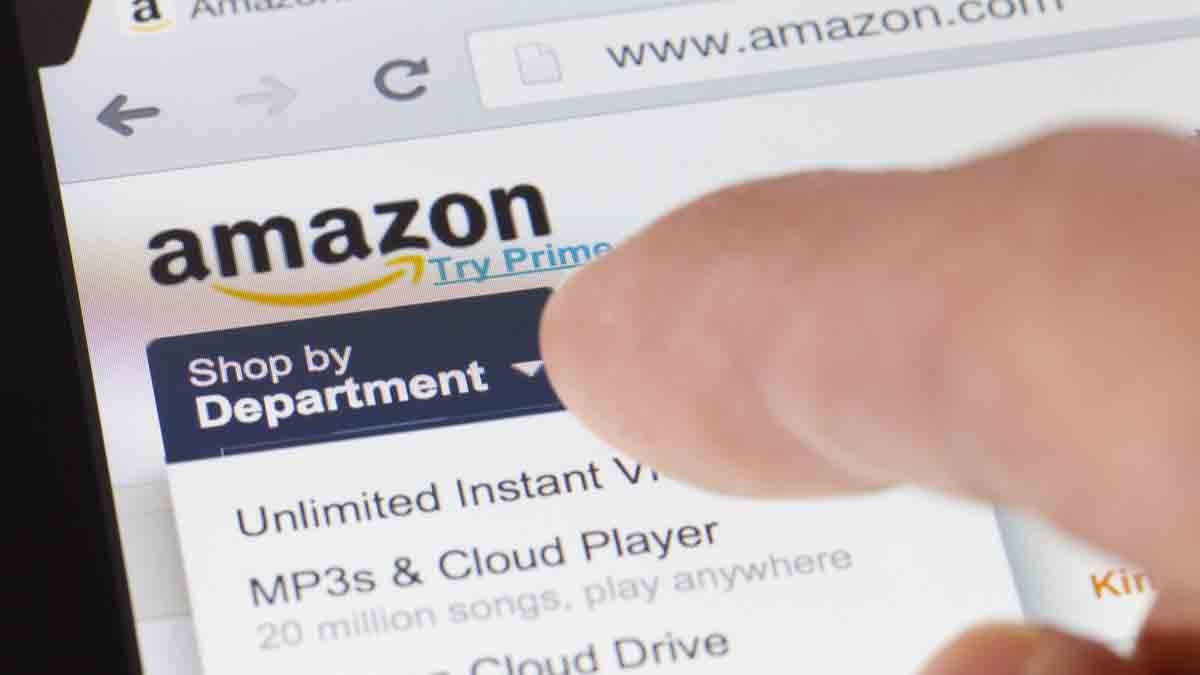
Amazon représente désormais 37,6 % de toutes les dépenses de commerce électronique aux États-Unisavec près de 2 millions de petites et moyennes entreprises qui vendent sur la plateforme. Les vendeurs tiers représentent plus de 60 % de toutes les unités vendues. L’opportunité est énorme, mais la concurrence l’est tout autant.
Nous travaillons avec des milliers de vendeurs Amazon chaque jour. Ceux qui connaissent une croissance constante ne s’appuient pas sur une seule tactique. Ils accumulent de petits avantages sur les listes, les prix, le service client et les opérations jusqu’à ce que les résultats s’accumulent.
Ce guide présente 14 stratégies pratiques qui fonctionnent dès maintenant. Certaines prennent 15 minutes. D’autres nécessitent un effort continu. Toutes font progresser votre chiffre d’affaires sur Amazon.
Faites une recherche de mots-clés qui correspond à la façon dont les acheteurs recherchent.
Keywords determine whether shoppers find your products on Amazon. The terms people type into Amazon’s search bar change constantly based on seasonal trends, cultural shifts, and algorithm updates. What ranked well six months ago might not perform today.
Strong keyword research means going beyond your top five obvious terms. Each product listing should target dozens of relevant keywords, covering variations in how shoppers describe the product, its features, materials, and use cases. The goal is to appear in as many relevant searches as possible without stuffing irrelevant terms into your listing.
Tools like Helium 10, SellerApp, Jungle Scout, and AMZ One generate keyword lists with search volume, competition level, and trending data. These help you identify high-opportunity keywords that your competitors might be missing.
Update your keyword strategy at least quarterly. Seasonal shifts, new competitor entries, and changes to Amazon’s A10 algorithm all affect which terms drive traffic to your listings.
Utilisez un logiciel de retarification pour rester compétitif
Price is a deciding factor for most Amazon shoppers. 28% of customers complete a purchase in three minutes or less, which means pricing decisions happen fast. You need your prices to be competitive at the exact moment a buyer lands on your listing.
Repricing software automates this process in real time. It monitors competitor pricing and market fluctuations, then adjusts your prices within the rules you set. You define your minimum and maximum price, your profit margin floor, and your pricing strategy. The software handles the rest.
The best repricing tools also factor into Buy Box eligibility. Since over 80% of Amazon sales flow through the Buy Box, competitive pricing directly impacts how often your products appear in that prime position.
Start with a trial from a repricing provider to measure the impact on your sales velocity and margin before committing.
Obtenez plus d’avis sur Amazon
Reviews are the trust signal that shoppers rely on before buying. 72% of online shoppers will not purchase a product until they read reviews from other buyers. Even a strong product with solid marketing stalls without social proof.
Positive reviews also influence Buy Box eligibility. Amazon’s algorithm factors in review count and average rating when deciding which seller to feature.
To get more reviews:
- Use Amazon’s « Request a Review » button in Seller Central for every completed order
- Enroll in the Amazon Vine program for new product launches to generate initial reviews from trusted reviewers
- Follow up with buyers through Amazon-approved messaging to encourage honest feedback
- Use feedback and review software to automate review requests at the right time after delivery
Focus on delivering a product experience worth reviewing. Fast shipping, accurate product descriptions, and quality packaging all increase the likelihood of positive feedback.
Offrir un service à la clientèle rapide et fiable
Customer service directly affects your seller metrics, Buy Box eligibility, and repeat purchase rate. Amazon tracks your response times, resolution rates, and buyer satisfaction scores. Falling behind on any of these metrics puts your account at risk.
Responsiveness matters more than anything. Amazon expects sellers to respond to buyer messages within 24 hours. Missing that window hurts your account health and reduces your chances of winning the Buy Box.
For sellers managing messages across Amazon, eBay, Shopify, and other channels, keeping up gets complicated fast. A helpdesk built for eCommerce consolidates all your customer messages into one inbox, displays order details alongside each conversation, and automates responses to common questions like « Where is my order? » and « How do I return this? »
Great customer service does more than protect your metrics. It builds the kind of buyer confidence that turns one-time shoppers into repeat customers.
Utilisez les outils de vente Amazon pour travailler plus intelligemment
Selling on Amazon involves dozens of moving parts: pricing, listings, reviews, shipping, customer service, inventory, advertising, and compliance. Trying to manage all of these manually limits how fast you grow.
Amazon seller tools exist for every part of your operation:
- Repricing tools to keep your prices competitive and win the Buy Box
- Helpdesk software to centralize customer messages and automate common responses
- Feedback and review software to generate more positive reviews consistently
- Inventory management tools to prevent stockouts and overstocking
- Analytics tools to track performance, identify trends, and spot problems early
The right combination of tools depends on your business size, number of sales channels, and the specific bottlenecks slowing your growth. Start by identifying where you spend the most manual time, then find tools that automate those tasks.
Lancez des publicités Amazon avec un objectif ACOS clair
Amazon ads drive sales, but only when you run them with discipline. Throwing budget at campaigns without tracking performance burns money fast.
The key metric to watch is your Advertising Cost of Sales (ACOS), the percentage of ad spend needed to generate a sale. A lower ACOS means more efficient ad spending and higher profit per sale.
To improve your ad performance:
- Start with Sponsored Product campaigns targeting your highest-converting keywords
- Set clear ACOS targets based on your product margins. If your margin is 30%, an ACOS above 25% eats most of your profit
- Review search term reports weekly to find high-performing keywords and add negative keywords for irrelevant searches
- Test Sponsored Brand and Sponsored Display campaigns once your Product campaigns are profitable
- Scale ad spend on proven winners rather than spreading budget thinly across every product
Amazon’s advertising revenue reached $68 billion in 2025, which shows how much sellers invest in ads. The sellers who profit are those who treat advertising as data-driven optimization, not a set-it-and-forget-it expense.
Optimisez vos listes de produits
Your product listing is your sales pitch. Most shoppers never scroll past the first few search results, and those who reach your listing decide within seconds whether to stay or move on.
Product title structure matters. Follow this formula:
- Brand name
- Product name
- Key features (size, color, material, quantity)
This format places the right keywords in the right order and immediately tells shoppers whether your product matches their search.
Beyond the title, optimize these elements:
- Bullet points: Lead with benefits, not features. Tell shoppers what the product does for them
- Product description and A+ Content: Use images, comparison charts, and detailed descriptions to answer buyer questions before they ask
- Images: Include at least 7 high-quality images showing the product from multiple angles, in use, and with size reference
- Backend search terms: Fill in all available keyword fields with additional relevant terms that do not fit naturally in your title or bullets
Clean, scannable listings outperform cluttered ones. Remove filler language and get to the point.
Gagnez la Buy Box d’Amazon
The Buy Box is where most Amazon purchases happen. Over 80% of all Amazon sales go through the « Add to Cart » and « Buy Now » buttons on a product page. If your offer is not in the Buy Box, you are competing for a fraction of the remaining sales.
Amazon’s Buy Box algorithm weighs several factors:
- Competitive pricing (total price including shipping)
- Fulfillment method (FBA sellers typically have an advantage)
- Seller performance metrics (order defect rate, cancellation rate, late shipment rate)
- Stock availability
- Customer review scores and response times
Repricing software keeps your pricing competitive without manual monitoring. Strong customer service metrics signal to Amazon that you deliver a reliable buyer experience. Maintaining healthy inventory levels prevents stockouts that cost you the Buy Box.
The sellers who win the Buy Box consistently treat it as an ongoing process. They monitor their Buy Box percentage by ASIN and respond quickly to drops.
Surveillez l’état de santé de votre compte Amazon
Amazon’s Account Health Rating (AHR) measures how well your account complies with seller policies. It considers both negative factors (unresolved policy violations) and positive factors (your contribution to a good customer experience).
Amazon reviews your AHR regularly. If your score drops below target, Amazon notifies you and gives you a window to fix the issues. Persistent problems lead to listing suppression or account suspension.
To maintain a healthy AHR:
- Resolve policy violations immediately when Amazon flags them
- Keep your order defect rate below 1%
- Maintain a late shipment rate under 4%
- Respond to buyer messages within 24 hours
- Monitor your Account Health dashboard in Seller Central at least weekly
Your AHR is not something to check once a month. Sellers who treat it as a daily operational metric catch problems before they escalate.
Respectez les délais des accords de niveau de service (SLA) d’Amazon
Your Service Level Agreement (SLA) on Amazon sets the expectations customers have for order fulfillment and delivery timing. Meeting these deadlines consistently builds trust, protects your seller metrics, and keeps your account in good standing.
SLAs cover your capacity to fulfill open orders, on-time shipping rates, and delivery timelines. Missing SLA targets damages your performance metrics and reduces your visibility in search results and Buy Box rotation.
For sellers managing multiple channels, tracking SLA deadlines across Amazon, eBay, and your own webstore gets complicated. eDesk’s customer service platform is built to alert you when SLA deadlines approach, so your team never misses a response window or fulfillment target.
SLAs also help manage customer expectations by defining your fulfillment commitments upfront. This transparency reduces disputes and builds the buyer confidence that drives repeat purchases.
Redoublez d’efforts pour vos produits les plus vendus
Growth does not always come from launching new products. Often the fastest path to higher Amazon sales is maximizing the performance of products that already sell well.
Review your sales data quarterly. Identify your top performers by revenue and profit margin. Then invest in making those listings even stronger:
- Upgrade product images and A+ Content for your best sellers
- Increase ad spend on proven winners with strong conversion rates
- Add more keyword variations to capture additional search traffic
- Request more reviews for these products to build stronger social proof
- Run promotions or Lightning Deals during peak shopping periods
Reliable revenue from best sellers also gives you the financial runway to test new products with less risk. Protect what works before chasing what is new.
Synchronisez vos stocks sur tous les canaux
Inventory management directly impacts your Amazon sales and profitability. Hold too much stock and storage fees eat into your margin. Run out of stock and you lose sales, rankings, and Buy Box eligibility.
82% of third-party sellers use Fulfillment by Amazon (FBA) to handle storage and shipping. FBA simplifies fulfillment but requires careful planning around Amazon’s storage limits and capacity thresholds.
For sellers operating across multiple channels (Amazon, eBay, Shopify, your own webstore), inventory synchronization prevents overselling and stockouts. When a product sells on one channel, your inventory count should update everywhere instantly.
Inventory management tools automate reorder alerts, track sell-through rates, and forecast demand based on historical data and seasonal trends. The right inventory management process turns a constant headache into a predictable system.
Développez vos activités sur de nouvelles places de marché Amazon
Amazon operates in over 20 marketplaces worldwide, including the US, UK, Germany, France, Japan, Australia, Brazil, Canada, Mexico, Singapore, and more. Expanding into new marketplaces opens your products to entirely new customer bases.
Before expanding, research which products perform well in your target market. Consumer preferences, pricing expectations, and popular categories vary significantly across countries.
Expansion also brings operational requirements:
- Localize your product listings with translations and market-specific keywords
- Adjust pricing for local purchasing power and competitor pricing
- Set up fulfillment logistics, either through Amazon’s international FBA programs or local fulfillment partners
- Provide multilingual customer service to handle buyer inquiries in each marketplace’s language
Managing customer service across multiple languages and marketplaces is where many sellers struggle. eDesk supports real-time translation in 150+ languages, allowing your team to respond to international buyers without hiring native speakers in every market.
Étudiez vos concurrents
Successful Amazon sellers pay close attention to what their competitors do. This does not mean copying their strategy. It means understanding your competitive environment so you price correctly, position your products clearly, and spot opportunities they miss.
Monitor these competitor signals:
- Pricing changes across your shared product categories
- New product launches that target your audience
- Review trends that reveal weaknesses in competitor products
- Keyword strategies visible through their listing titles and bullet points
- Advertising placement and Sponsored Product positioning
Repricing software automates competitor price monitoring. Helpdesk reporting surfaces patterns in customer feedback that highlight what buyers want and where competitors fall short.
The most useful competitor insights come from your own customer service data. When buyers tell you why they chose your product over alternatives, or what they wish was different, that feedback is more valuable than any third-party research tool.
Commencez à développer vos ventes sur Amazon dès aujourd’hui
Growing on Amazon comes down to stacking consistent improvements across your entire operation. No single tactic transforms your business overnight. But sellers who optimize their listings, price competitively, deliver strong customer service, and use the right tools will outperform those who do not.
Here is where to start:
- Audit your top 10 product listings for keyword gaps, image quality, and review count
- Set up repricing software to automate your pricing strategy and improve Buy Box win rate
- Check your Account Health Rating and resolve any open violations
- Evaluate your customer service response times across all channels. If you are managing messages across multiple platforms, a unified eCommerce helpdesk will save your team hours every day
- Review your ad campaigns and set clear ACOS targets for every active campaign
The sellers who grow fastest are those who treat Amazon as a system, not a set of disconnected tasks. Each improvement supports the next. Better listings drive more traffic. Faster customer service improves seller metrics. Stronger metrics win more Buy Box share. More Buy Box wins drive more sales.
Book a free eDesk demo to see how a purpose-built eCommerce helpdesk helps Amazon sellers respond faster, protect their account health, and deliver the customer service that drives repeat purchases.
Questions fréquemment posées
How do I get more sales on Amazon as a new seller?
Start with keyword research and listing optimization. Make sure your product titles, images, and descriptions are strong enough to convert the traffic you get. Use Amazon’s « Request a Review » button after every sale to build reviews early. Consider the Amazon Vine program to generate initial reviews. Set competitive prices and launch Sponsored Product campaigns with tight ACOS targets to drive visibility while your organic ranking builds.
What is the Amazon Buy Box and why does it matter?
The Buy Box is the « Add to Cart » and « Buy Now » section on a product page. Over 80% of Amazon sales happen through the Buy Box. Amazon’s algorithm selects which seller appears in the Buy Box based on pricing, fulfillment method, seller performance metrics, and stock availability. Winning the Buy Box consistently is one of the fastest ways to increase your sales volume.
How important are reviews for Amazon sales?
Reviews are critical. Most shoppers will not purchase a product without reading reviews first. Reviews also factor into Amazon’s search ranking and Buy Box algorithms. Products with more positive reviews rank higher in search results and win the Buy Box more frequently. Automate your review request process to build reviews consistently over time.
What tools do I need to sell successfully on Amazon?
At minimum, most successful sellers use repricing software, keyword research tools, and feedback management software. Sellers managing multiple channels also benefit from helpdesk software that centralizes customer messages and order data in one place. Inventory management tools become essential as your catalog and sales volume grow.
How do I improve my Amazon Account Health Rating?
Keep your order defect rate below 1%, your late shipment rate under 4%, and your pre-fulfillment cancellation rate under 2.5%. Respond to all buyer messages within 24 hours. Resolve policy violations immediately when Amazon flags them. Check your Account Health dashboard in Seller Central weekly.
Should I use FBA or fulfill orders myself?
FBA (Fulfillment by Amazon) gives you a significant advantage in Buy Box eligibility, Prime badge access, and customer trust. 82% of third-party sellers use FBA. Self-fulfillment (FBM) makes sense for oversized items, products with low margins, or sellers who want full control over the fulfillment experience. Many sellers use a hybrid approach.
How do I expand into international Amazon marketplaces?
Start by researching product demand in your target market. Localize your listings with translated content and market-specific keywords. Set up fulfillment through Amazon’s international FBA programs or local logistics partners. Provide customer service in the local language, either through multilingual staff or a helpdesk with built-in translation capabilities.
What is a good ACOS for Amazon ads?
A good ACOS depends on your product margins and business goals. For most sellers, an ACOS between 15% and 25% is profitable. During product launches, a higher ACOS (30%+) is acceptable to build visibility and reviews. Track both ACOS (ad-specific) and TACOS (total advertising cost of sales) to understand how ads impact your overall revenue, not only your sponsored sales.