Ecommerce Customer Service Outsourcing: How to Keep Control

Ecommerce customer service outsourcing can give you 24/7 cover and extra hands at peak, but your marketplace accounts still carry the risk of every reply. The safe way to do it is to hand over the work while keeping the queue, the rules and the data in your own helpdesk. This guide covers the models, the real cost of coverage, and what to keep in-house.
TL;DR
Do the coverage maths first. One seat staffed around the clock needs about 4.2 full-time agents before breaks and leave.
Keep the queue in your helpdesk. Give outsourced agents their own logins and limited permissions, never shared marketplace passwords.
Keep money and disputes in-house. Set written refund limits and escalate chargebacks, A-to-z claims and eBay disputes to your team.
Ecommerce customer service outsourcing models and costs
Customer service outsourcing means paying an outside team to answer some or all of your customer messages. For sellers, the main models are:
Model | How it works | Where it fits |
| Freelance or rented agents | You hire individuals and manage them yourself | Small teams adding evening or weekend cover |
| Managed team | A provider supplies, trains and supervises agents | Steady volume across several channels |
| Pay-per-ticket | You pay for each ticket handled | Volume that swings by season |
| AI-led service | AI resolves routine tickets; people take the rest | High share of order-status and policy questions |
| In-house plus AI | Your team keeps the queue; AI removes repeat questions | Sellers who want full control of account health |
Book a Free Demo to see outsourced agents, AI Agent and your own team working one queue.
The coverage maths
Hours to cover per week / 40 = full-time agents needed. Round-the-clock cover is 168 hours, so one seat needs 4.2 agents. US customer service representatives earned a median of $21.53 an hour in May 2025, or about $3,730 a month for a 40-hour week. Staffing one 24/7 seat in-house at that wage is roughly $15,670 a month in pay alone, before benefits, management and tools. Compare that with each provider's quote for the same hours.
When to outsource, and how
Signs it is time: first response time rising for several weeks running, a backlog older than a day, CSAT falling, or agents unable to cover weekends and a marketplace's reply window. Before you call providers, list monthly conversations by channel and marketplace, the hours that need a human reply, languages, ticket types, refund rules and your helpdesk.
Set goals and KPIs.
Scope channels, hours and ticket types.
Write SOPs and reply examples.
Choose a model and shortlist providers.
Contract: notice period, seat minimum, setup fee, peak pricing and capacity, SLA targets and penalties, QA method, data handling and exit terms.
Onboard inside your helpdesk.
Review weekly for the first month.
 Keep the queue, the rules and the quality
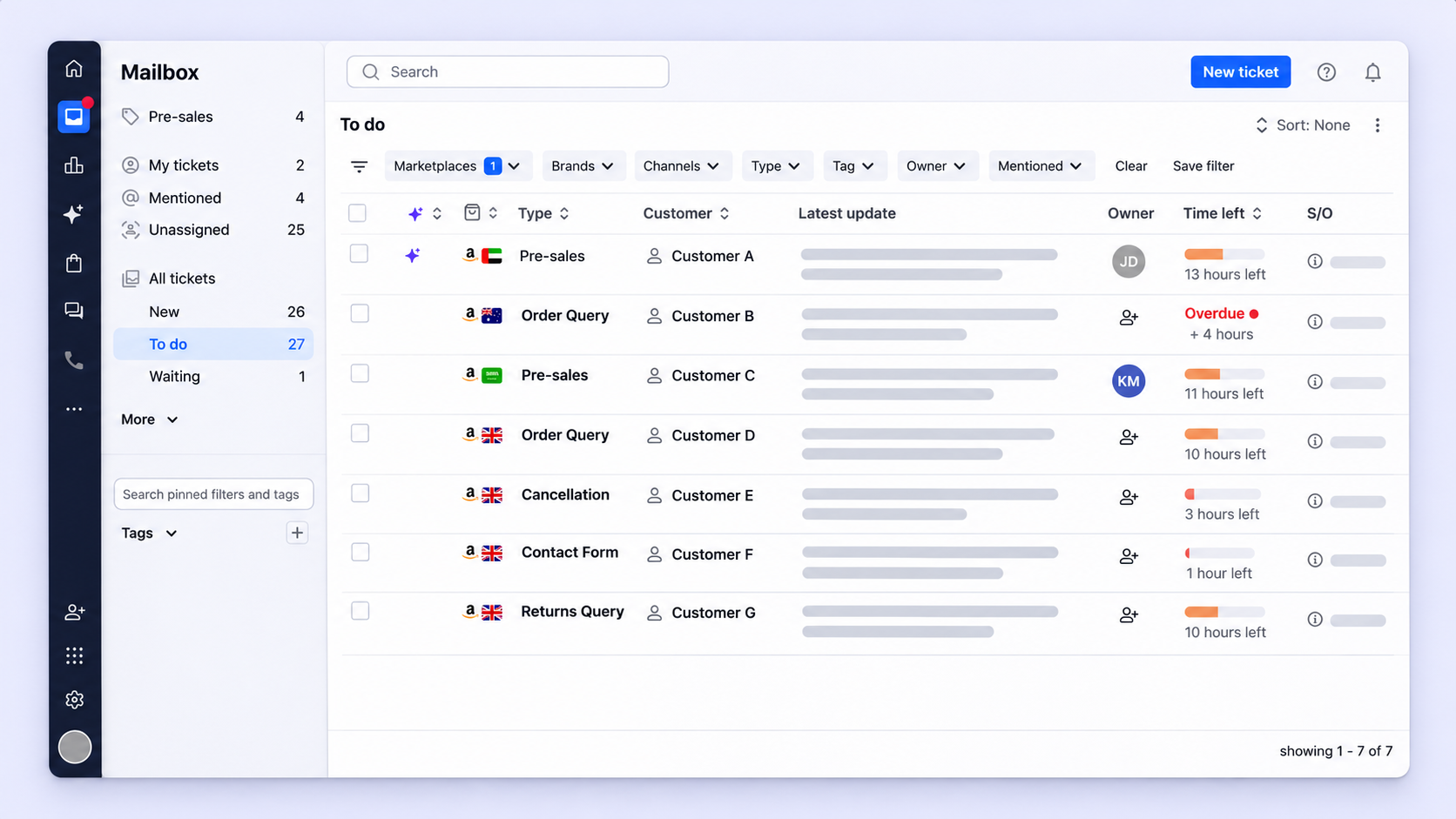
The biggest risk in ecommerce customer service outsourcing is losing sight of what is said in your name. Run outsourced agents inside your own helpdesk. Give each one a seat, a role with only the permissions they need, and a saved view for their team. In eDesk, roles and permissions are on the Growth plan and above, and snippets fill in order, delivery and customer data so agents never copy details between systems. On marketplaces, add people through the platform's own user tools: Amazon lets you invite users and grant permissions, and says account credentials are unique and should not be shared.
Onboarding and refund control
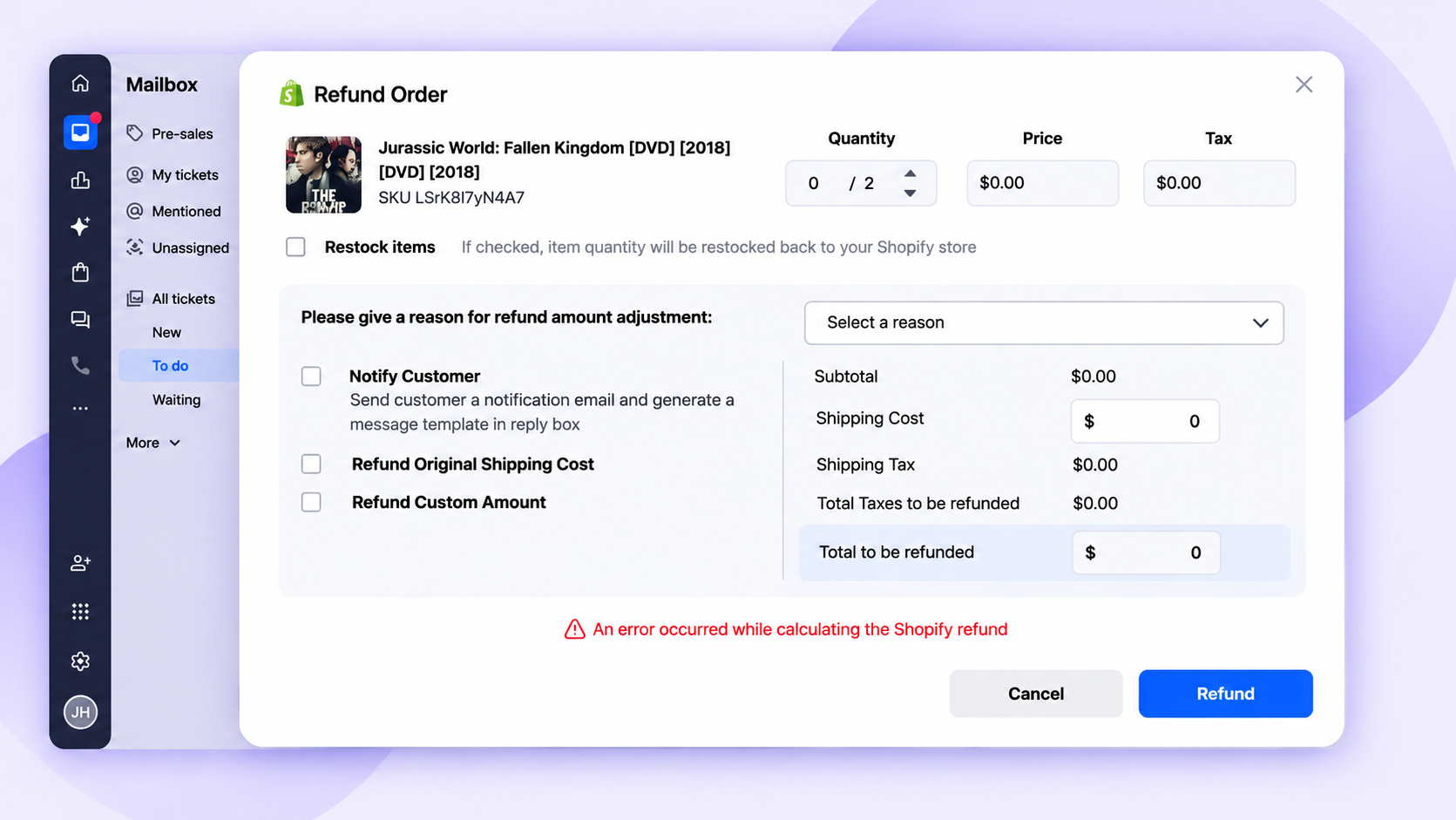
Hand over SOPs per ticket type, 20 to 30 real reply examples, refund and replacement limits, an escalation list, a product FAQ and each marketplace's messaging rules. Write refund limits per agent tier. Chargebacks, A-to-z claims, eBay disputes, legal threats and safety issues always go to your team. See our list of customer service skills for what to train.
 Measuring an outsourced team
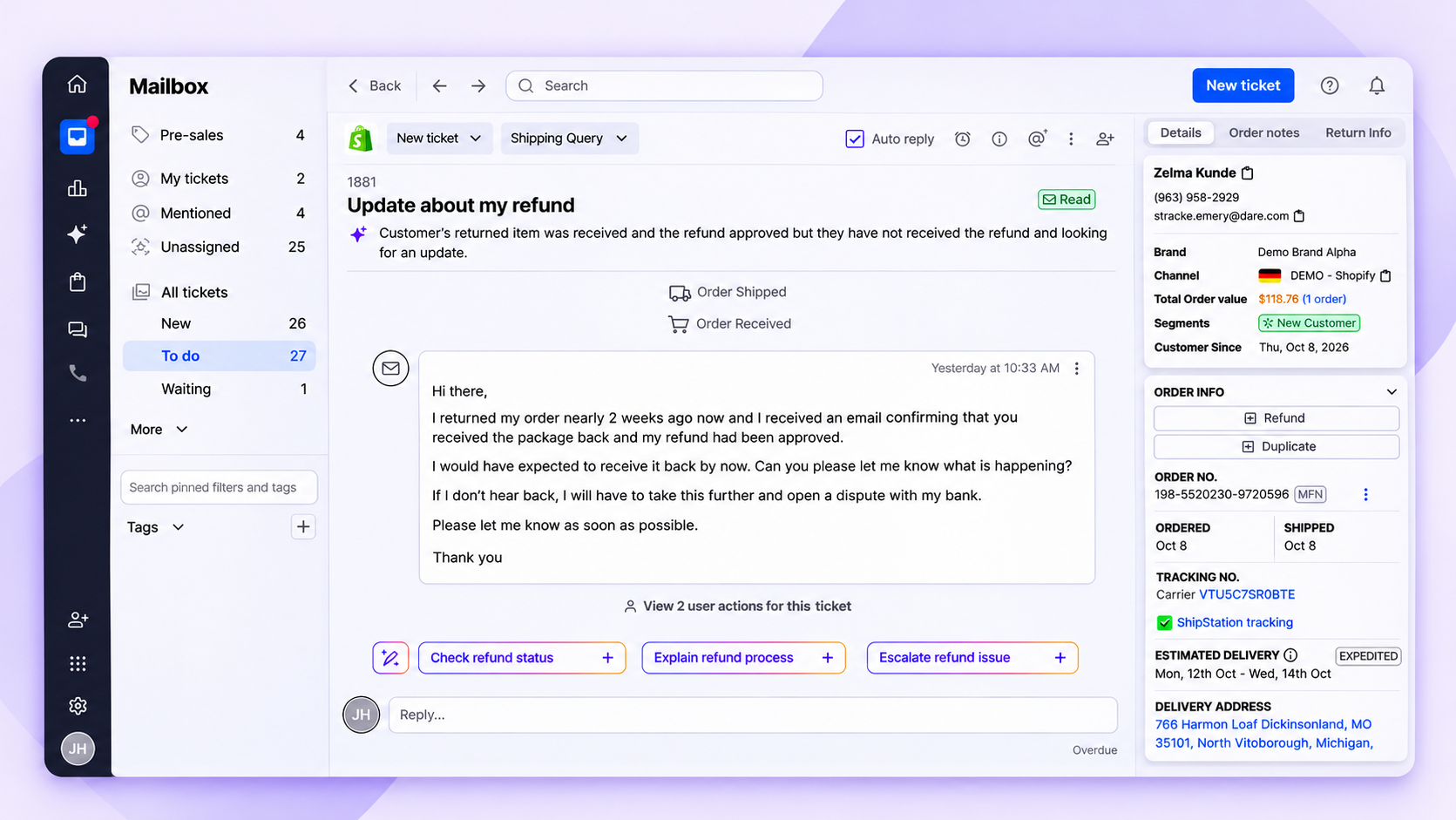
Review a sample of replies each week and KPIs each month: first response time, resolution time, CSAT and reopen rate. Ask the provider for a weekly report covering contact reasons by share, SLA performance, fixes made, and product or stock issues customers raised. Our guide to tracking customer service metrics covers the dashboards.
Peak season, and outsource versus automate
For Black Friday, agree a date by which you confirm extra capacity, put surge pricing in the contract, and load templates for delay and cut-off questions. Automating order-status tickets first means fewer outsourced hours at peak. AI handles order status, tracking and returns-policy questions well. Damage claims, disputes and upset customers need people, in-house or outsourced. Many sellers do both: AI takes the routine questions and a partner covers the hours their team cannot.
Languages, time zones and data security
Ecommerce customer service outsourcing is often about languages and time zones rather than headcount. A multilingual provider suits high volume in one language. For lower volume across many, AI translation inside your helpdesk can cover the gap. Pertemba Global, which supports marketplace brands across Europe, America, and Asia, uses eDesk auto-translation to answer in languages it does not cover in-house, and reached 97.6% SLA compliance within 24 hours during peak season. For follow-the-sun coverage, each shift leaves a note on every open ticket before handing over.
Protect data with least-privilege roles, no shared marketplace logins, and a data processing agreement. Under the GDPR, a provider handling your customer data needs a contract that sets out its duties, including what happens to the data when the contract ends. Keep card details out of agents' reach, and remove access the day a provider or agent leaves.
 Key takeaways
Hours per week / 40 gives the agents you need; 24/7 cover is 4.2 per seat.
Run ecommerce customer service outsourcing inside your own helpdesk, with role-based access.
Never share marketplace logins; add users through each platform's permission tools.
Keep refunds above set limits, chargebacks and marketplace disputes in-house.
Automate routine tickets first, then outsource the hours and languages you cannot cover.
Start for free and set up roles, views and templates before your outsourced team starts.
Outsource the work, keep the control
Ecommerce customer service outsourcing works when the provider works inside your systems, to your rules. Do the coverage maths, automate the routine questions first, then outsource the hours and languages your team cannot cover. Keep refunds, disputes and marketplace access under your own control, and review the work weekly. Start small, with one channel or one shift, and widen the scope once the weekly reports show the provider meets your targets. Done this way, ecommerce customer service outsourcing adds cover without adding risk. For how outsourcing fits the wider plan, see our ecommerce customer service guide.
Frequently asked questions
1. What is customer service outsourcing?
It is paying an outside team to answer some or all of your customer messages, calls or chats, usually to extend hours, add languages or cover peak volume.
2. How does customer service outsourcing work?
You agree channels, hours, ticket types and targets in a contract, hand over SOPs and reply examples, and give the provider's agents limited access to your helpdesk. You then review their work against agreed KPIs.
3. How does AI improve customer service outsourcing?
AI resolves routine tickets such as order status before they reach the outsourced team, so you pay for fewer hours. It can also draft replies and translate messages for outsourced agents.
4. How much does outsourcing customer service cost?
It depends on hours, languages and model. Compare quotes with the in-house cost: one 24/7 seat needs 4.2 full-time agents, about $15,670 a month at the US median wage before benefits.
5. Can I outsource Amazon or eBay messages?
Yes, if agents work through your helpdesk or the marketplace's own user permissions, follow each marketplace's messaging rules, and escalate claims and disputes to you.
Author:
