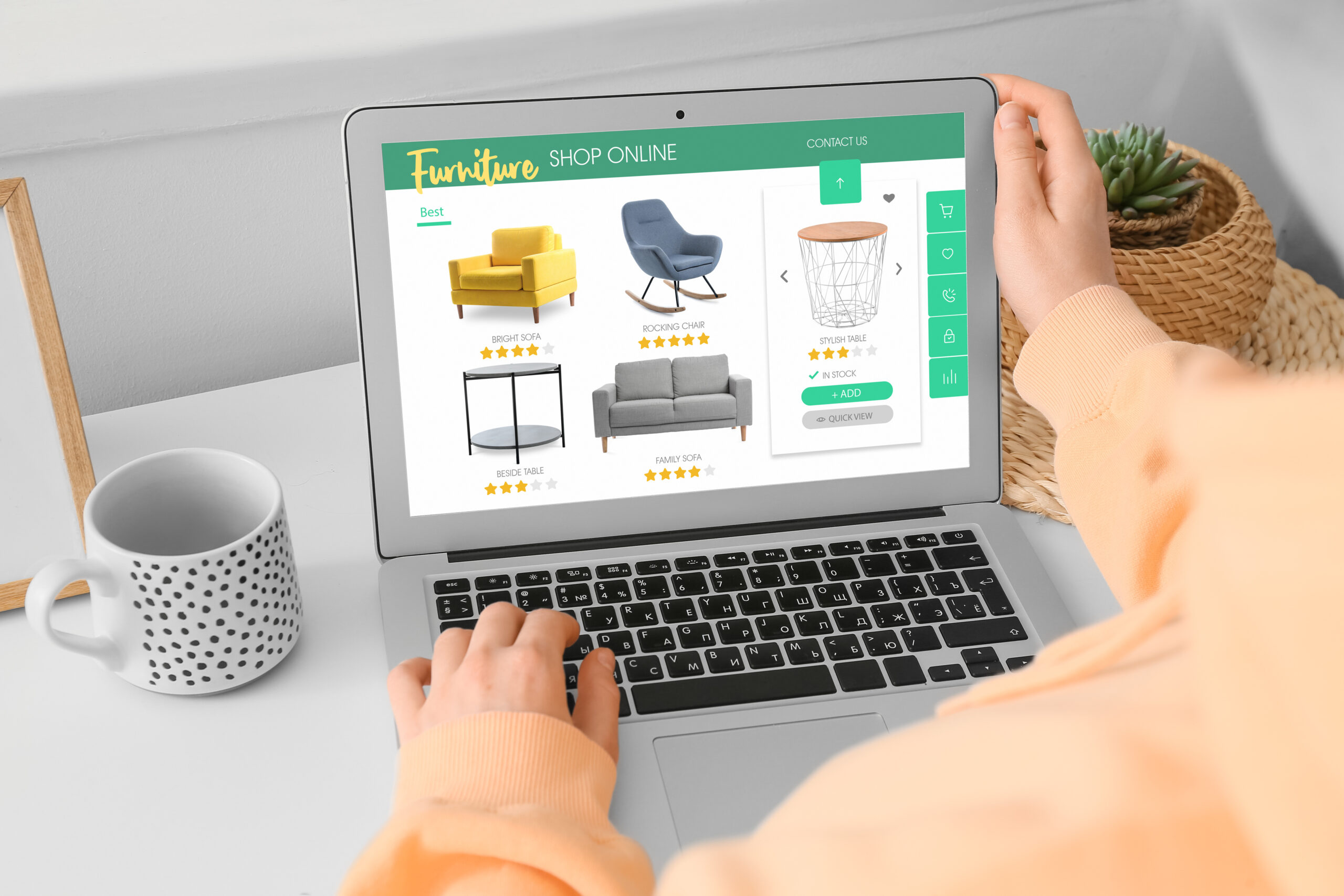
TL;DR: The best platforms for selling furniture online in 2026 depend on your product type, target market, and logistics setup. Amazon delivers the largest buyer pool with 310M+ active users. Wayfair offers specialized furniture logistics and a loyal 21M+ customer base with 80% repeat orders. Etsy fits handmade and vintage furniture sellers reaching 87M+ active buyers. TikTok Shop works for small, trend-driven pieces across 53M+ US social shoppers. Curated marketplaces like Macy’s and Best Buy give you access to loyal, high-intent audiences with less competition. European sellers should look at ManoMano, OTTO, and 1stDibs for regional reach.
Selling furniture online is a different animal compared to other eCommerce categories. Average order values run higher. Returns are more complicated. Shipping a 200-pound dining table is nothing like dropping a phone case in a mailer.
We’ve spent time digging into the platforms that matter most for furniture sellers heading into 2026. Whether you’re moving mass-market flat-packs or handcrafted heirloom tables, this guide breaks down the US, European, and curated marketplaces where your products belong.
The global furniture market reached $736.21 billion in 2025 and keeps growing. The US online household furniture sales industry alone hit $74.3 billion the same year. That is a lot of opportunity for sellers who pick the right platforms and nail their logistics.
What Makes Selling Furniture Online Different from Other eCommerce Categories?
Furniture sits in a unique spot within eCommerce. Buyers spend more per order but expect more from the experience. Here is what sets furniture apart.
High Average Order Values Raise the Stakes
A single couch or bedroom set costs hundreds or thousands of dollars. That means every customer interaction carries more weight. A botched delivery or slow response to a damage claim risks bigger refund payouts and worse reviews than in most other categories.
Logistics Are Complex and Expensive
Last-mile delivery for bulky items involves LTL (Less-Than-Truckload) freight carriers, white-glove delivery services (assembly, placement, debris removal), and clear return policies for oversized goods. Not every marketplace handles this well. The platforms that offer built-in freight solutions give furniture sellers a real advantage.
Buyers Need to Visualize the Product
Customers cannot sit on a couch or test a table’s sturdiness through a screen. Platforms that support 3D visualization, augmented reality (AR) previews, and high-resolution image galleries help reduce return rates and increase conversions.
Which US Platforms Are Best for Selling Furniture Online?
The US market gives furniture sellers a range of options. Generalist marketplaces bring massive traffic. Home-specific platforms offer specialized logistics. Here is how each one stacks up.
1. Amazon (Furniture Category)
Buyer Scale: 300M+ active users worldwide, with the US representing over 80% of traffic.
Key Features: Massive reach through Amazon’s marketplace. Sellers use FBA for smaller items and coordinate third-party LTL freight carriers for bulky furniture.
Seller Pros:
- Unmatched sales volume and visibility
- Strong consumer trust. Prime benefits drive high conversion rates.
- Access to Amazon’s 2.2+ billion monthly site visits
Seller Cons:
- High competition across all furniture subcategories
- Referral fees run high (15% on the first $200, then 10% above that)
- Coordinating freight shipping adds complexity
Amazon makes sense for sellers who want maximum volume and are ready to handle the logistics side themselves or through third-party carriers.
2. Walmart Marketplace
Buyer Scale: 480-500M monthly site visits with strong Home category growth.
Key Features: Third-party marketplace for essential and decorative furniture. Walmart uses its physical store network for fulfillment of non-bulky items.
Seller Pros:
- Less seller competition than Amazon
- Generally lower referral fees
- Strong value-pricing appeal among Walmart’s customer base
Seller Cons:
- Products need approval before listing
- Large items often require seller-managed LTL shipping
- Lower luxury brand appeal
For sellers who want to reach a high-traffic audience with less competition than Amazon, Walmart is worth serious consideration.
3. Wayfair (Marketplace/Supplier Model)
Buyer Scale: 21.2M active customers as of Q3 2025. Repeat customers account for 80.1% of all orders delivered.
Key Features: Home-only platform operating primarily on a drop-ship supplier model. Sellers control inventory, but Wayfair controls pricing and logistics.
Seller Pros:
- Specialized logistics for furniture delivery, returns, and white-glove service
- High brand recognition in the Home sector
- Average order value of $317 shows buyers are spending on quality pieces
Seller Cons:
- High entry barrier with a strict vetting process
- Sellers lose control over customer pricing and data
- Operates more like a wholesale supplier contract than a traditional marketplace
Wayfair is the strongest option for sellers who need a platform built around bulky goods logistics and a home-focused buyer audience.
4. Etsy
Buyer Scale: 86.6M active buyers as of Q3 2025, down 5% year-over-year but still a massive audience for niche products.
Key Features: Specialized in handmade, vintage, reclaimed, and custom furniture. Think custom farmhouse tables, mid-century modern refurbished pieces, and one-of-a-kind decor.
Seller Pros:
- High-intent audience searching for unique, artisan pieces
- High AOV for custom work
- Low startup cost with no monthly store fee
Seller Cons:
- Limited to unique, vintage, or handmade items (mass-produced furniture does not fit here)
- Heavy shipping costs on large furniture deter impulse purchases
- Transaction fee of 6.5% plus $0.20 per listing
Etsy is the go-to for independent furniture makers and vintage dealers who want buyers specifically looking for their type of product.
5. TikTok Shop (US)
Buyer Scale: 53.2M TikTok buyers in the US in 2025, growing 13.6% year-over-year. TikTok Shop now commands 18.2% of US social commerce.
Key Features: Live and social commerce through in-app shopping. Content-driven product discovery, where users scroll for entertainment and end up buying.
Seller Pros:
- Strong for trend-driven accessories, small furniture (side tables, storage solutions), and viral organization products
- Low introductory referral fee (around 6%)
- Over $15.8 billion in US sales through TikTok Shop in 2025
Seller Cons:
- Unsuitable for large or high-value furniture
- Impulse-driven sales produce high return rates
- Product trust concerns among some buyers
TikTok Shop works for sellers moving small, photogenic, and trend-friendly furniture items. It is not the place for a $3,000 sectional.
For sellers managing orders across Amazon and TikTok Shop simultaneously, centralizing your customer messages prevents things from slipping through the cracks.
What About Curated Retailer Marketplaces for Furniture?
These platforms offer a highly vetted selling environment. Less competition. More brand-loyal customers. The trade-off is stricter entry requirements.
6. Bed Bath & Beyond (Beyond Inc.)
Buyer Scale: Millions of monthly unique visitors. Customer base focused entirely on Home Goods.
Key Features: Pure-play eCommerce platform (all physical stores are closed). Actively expanding furniture and home goods through a third-party Partner Program.
Seller Pros:
- 100% focus on the home category
- High visibility among home-goods-focused buyers
- Streamlined partner onboarding process
Seller Cons:
- Smaller sales volume than Amazon or Walmart
- Currently rebuilding brand trust under Beyond Inc. ownership
7. Macy’s Marketplace
Buyer Scale: 29M+ loyalty members with high site traffic across fashion and home.
Key Features: Highly curated, invite-only third-party marketplace. Strong presence in high-end Home and Decor alongside their core apparel business.
Seller Pros:
- Access to an affluent, brand-loyal customer base
- Less competition due to strict curation
- Sellers are eligible for major Macy’s promotional events
Seller Cons:
- Strict vetting and operational requirements (US-based fulfillment, GS1 UPCs)
- Furniture items over 150 lbs. need special approval
- Commission typically runs 15% of the sale price
8. Best Buy Marketplace
Buyer Scale: 200M+ customers annually with over 10 billion site views per year.
Key Features: Recently launched third-party marketplace. Focus areas include Office Furniture, Gaming Chairs/Desks, and Home Tech (TV stands, smart furniture).
Seller Pros:
- Massive, tech-savvy customer base
- Customers return third-party items to physical stores, which is a big advantage for bulky goods
- Lower competition in the furniture-adjacent tech category
Seller Cons:
- Highly selective vetting process
- Products need to be adjacent to electronics or office tech
- Referral fees start around 8% but vary by category
US Marketplace Fee Comparison for Furniture Sellers
Here is a quick breakdown of what you will pay across the major US platforms:
- Amazon Furniture: 15% referral fee on the first $200 of sale price, 10% on the portion above $200
- Walmart Marketplace: Referral fees vary by category, generally lower than Amazon
- Wayfair: Margin-based model (wholesale supplier structure)
- Etsy: 6.5% transaction fee + $0.20 listing fee
- TikTok Shop: ~6% introductory referral fee
- Macy’s Marketplace: ~15% commission on sale price
- Best Buy Marketplace: Starting around 8%, varies by category
Which European Platforms Should Furniture Sellers Consider?
Europe has dedicated home and DIY marketplaces with logistics networks built specifically for bulky goods.
1. ManoMano
Region: Pan-EU (France, Germany, UK, Spain, Italy).
Buyer Scale: 50M monthly visitors. Europe’s leading DIY, Home Improvement, and Garden specialist.
Key Features: Dedicated to Home & Garden categories with a strong focus on tools, building materials, and larger home installations including furniture.
Seller Pros:
- Highly targeted audience for home and garden products
- Specialized ManoMano Fulfillment for bulky items
- Strong pan-European reach
Seller Cons:
- High commission rates (15-25%) plus a monthly subscription fee
- Heavy competition within building materials
2. OTTO (Marketplace)
Region: Germany, expanding across Europe.
Buyer Scale: Over 9M active customers. Germany’s second-largest general retailer.
Key Features: Strong presence in Home, Furniture, and Lifestyle categories. Operates a pure third-party marketplace model.
Seller Pros:
- High customer trust in the German market
- Lower return rates compared to fashion categories
- OTTO handles payment processing
Seller Cons:
- Requires a significant one-time setup fee
- Strong emphasis on German localization
3. Home24
Region: Germany + broader EU presence (including France).
Buyer Scale: Over 2M active customers with approximately 4.2M monthly visits.
Key Features: Curated marketplace specializing in Furniture and Home & Living. Known for modern design focus.
Seller Pros:
- Strong brand awareness in the DACH region for furniture
- Competes directly with Wayfair/IKEA through its third-party model
- Modern, design-focused buyer audience
Seller Cons:
- Smaller scale compared to Amazon or OTTO
- Must comply with local EU/German quality standards
4. 1stDibs
Region: Global, with a focus on high-spending customers.
Buyer Scale: ~64K active buyers, 7M+ registered users (extremely high AOV).
Key Features: Niche platform for luxury, vintage, and antique furniture plus high-end home decor.
Seller Pros:
- Access to affluent, global interior designers and collectors
- Exceptionally high AOV and perceived brand prestige
- Global buyer base
Seller Cons:
- High commission rates (25%+)
- Rigorous vetting and curation process
5. Cdiscount
Region: France + Benelux, Germany.
Key Features: France’s second-largest marketplace. Generalist platform with strong Home and Furniture categories. Offers third-party fulfillment.
Seller Pros:
- High visibility in the French market
- Cdiscount Fulfillment (FC) for bulky goods
- Competitive pricing environment
Seller Cons:
- Reputation leans toward value/discount positioning, which challenges premium furniture brands
European Marketplace Fee Comparison
- ManoMano: 15-25% commission + monthly subscription fee
- OTTO: Commission varies. Competitive rates but requires a significant initial setup fee.
- 1stDibs: 25%+ commission reflecting luxury/niche positioning
- Cdiscount: Competitive commission rates with optional fulfillment fees
How Do You Choose the Right Furniture Platform for Your Business?
Your choice depends on your business goals. Here is a breakdown by objective:
Maximum Volume and Scale: Amazon (US/EU) and Walmart (US). Focus on small-to-mid-size furniture you ship easily through drop-ship or freight models.
Bulky and Complex Logistics: Wayfair (Supplier Model) and ManoMano (EU). Partner with platforms offering built-in specialized fulfillment and returns for heavy goods.
Curated, High-Trust Audience: Macy’s and Best Buy (US). Use the low-competition environment to reach loyal, high-intent brand customers.
High-End and Vintage Furniture: 1stDibs (Global) and Etsy (Custom/Vintage). Invest in exceptional product photography, detailed descriptions, and responsive customer service.
German/Central European Focus: OTTO and Home24 (DE). Take advantage of high brand trust and dedicated audiences in the region.
Home Goods Volume: Bed Bath & Beyond/Beyond Inc. (US). A solid platform for building digital visibility in the pure-play home goods space.
What Are the Biggest Challenges for Online Furniture Sellers?
Even with the right platform, furniture sellers face hurdles that other eCommerce categories do not.
How Do You Handle Last-Mile Delivery for Large Furniture?
Last-mile delivery and returns of large items remain the biggest operational challenge for furniture sellers. Success depends on a reliable LTL carrier network and clear policies for white-glove delivery, which includes assembly, placement, and packaging removal. Platforms like Wayfair and ManoMano that offer built-in freight solutions give sellers a leg up here.
Why Is Product Visualization So Important for Furniture Sales?
Buyers need to see and feel confident about a purchase they cannot physically touch. Platforms supporting 3D visualization, AR tools, and galleries of high-resolution images help reduce return rates. Shopify’s internal data shows that merchants using 3D and AR visualization see a 40% reduction in returns, making these tools essential for online furniture sellers dealing with bulky, high-value items.
Why Does Customer Service Matter More for Furniture?
Furniture’s high AOV makes customer satisfaction critical. Buyers often reach out about assembly instructions, freight delays, or transit damage. These are not quick-fix tickets. They require context, speed, and cross-platform coordination, especially if you sell on multiple marketplaces at once.
How eDesk Helps Furniture Sellers Manage Multi-Marketplace Support
Selling furniture across Amazon, Walmart, Etsy, TikTok Shop, and European marketplaces means managing customer messages from a dozen different platforms. Missing a message on one channel while you’re putting out a fire on another is a recipe for negative reviews and lost sales.
A multichannel eCommerce helpdesk like eDesk centralizes all your customer messages into one inbox. Whether a buyer on Amazon is asking about assembly, a Walmart customer needs a delivery update, or an Etsy shopper wants custom dimensions, everything lands in one place.
With eDesk, furniture sellers get:
- A single shared inbox pulling messages from Amazon, Walmart, Etsy, TikTok Shop, and dozens of other channels
- AI-powered automation that handles common queries so your team focuses on high-value furniture tickets
- Order data attached to every message, giving agents full context before they respond
- SLA tracking to make sure you never miss a marketplace response deadline
Managing high-value furniture tickets across multiple channels does not have to be chaotic. Book a demo with eDesk and see how centralizing your customer support streamlines your operations and helps you sell more furniture with less effort.
FAQs
What is the best platform to sell furniture online in 2026?
The best platform depends on your furniture type and business goals. Amazon offers the largest audience with 310M+ active users. Wayfair specializes in home furniture with built-in logistics for bulky items. Etsy serves handmade and vintage furniture sellers. For high-end pieces, 1stDibs connects you to affluent collectors and interior designers worldwide.
How much does it cost to sell furniture on Amazon?
Amazon charges a 15% referral fee on the first $200 of the sale price and 10% on the portion above $200 for furniture items. Additional costs include FBA fees for smaller items or third-party LTL freight charges for bulky furniture.
Is Wayfair a good platform for furniture sellers?
Wayfair is one of the strongest platforms for furniture sellers who need specialized logistics. The platform had 21.2M active customers in Q3 2025, with 80% repeat orders. The trade-off is that Wayfair controls pricing and customer data, operating more like a wholesale supplier relationship than a traditional marketplace.
Is TikTok Shop a good platform for selling furniture?
Yes, but TikTok Shop is best suited for small, trend-driven furniture items like side tables, storage solutions, and decor accessories. With 53.2M US buyers in 2025 and a low ~6% referral fee, TikTok Shop works well for photogenic, lower-priced pieces. Large or high-value furniture is not a good fit for the platform.
What are the best European marketplaces for selling furniture?
ManoMano leads for DIY and Home Improvement across France, Germany, UK, Spain, and Italy with 50M monthly visitors. OTTO is Germany’s second-largest retailer with 9M+ active customers. 1stDibs serves the luxury and antique furniture niche globally. Home24 targets the DACH region with a modern design focus.
How do you manage customer service when selling furniture on multiple platforms?
A multichannel helpdesk like eDesk pulls customer messages from Amazon, Walmart, Etsy, TikTok Shop, and other channels into one shared inbox. This prevents missed messages and gives your team full order context for every conversation, which is especially important for high-value furniture questions involving shipping damage, delivery updates, or assembly support.
What are the biggest challenges when selling furniture online?
The three main challenges are: last-mile delivery logistics for bulky items (requiring LTL carriers and white-glove service), helping buyers visualize products they cannot physically touch (through AR tools and high-quality imagery), and handling complex customer service questions that involve assembly, freight delays, or transit damage across multiple sales channels.