How to Choose an AI Chatbot Platform for eCommerce Support

Disclosure: This guide is published by eDesk, one of the five platforms in the price table. Prices come from each vendor's own pricing page, checked 1 to 3 November 2026; confirm them before you buy.
The right AI chatbot platform for eCommerce is the one that can answer from your real order data, on every channel your buyers use, and hand over cleanly when it cannot. The only way to know is to test it on your own past tickets before it talks to a customer. This guide covers what to check, what each pricing model costs at the same volume, and how to launch.
TL;DR
Order data first. A bot that only reads help articles cannot tell a buyer where their parcel is.
Compare what you are billed for. Some platforms charge per resolution, others per conversation the AI replies to.
Replay last quarter's tickets before go-live. Read the answers, score them, and launch only the intents that pass.
Test and price an AI chatbot before you buy
Replay the bot on last quarter's tickets
Before you sign with any AI chatbot platform for eCommerce, export three months of tickets and run the bot against them in test or draft mode. Read each answer and mark it correct, wrong, or "should have handed over". Launch only the question types where it passes, and keep the rest with your team. eDesk's 14-day trial runs in Safe Mode, which connects your channels without sending messages, so you can test on live data first.
Published starting prices
Platform | Entry price | AI billing unit | Gap to know |
| eDesk AI Agent | $45 per agent/month, annual (Essential) | $0.99 per outcome: a reply or action, charged once per ticket | Runs inside the eDesk helpdesk |
| Tidio Lyro | From $32.50/month for 50 Lyro conversations | Per conversation with at least one AI reply | Higher-volume rates not published on the pricing page |
| Intercom Fin | $29 per seat/month list, annual (Essential) | $0.99 per Fin outcome, including set handoffs | No native marketplace connection |
| Zendesk AI agents | $55 per agent/month, annual (Suite Team) | $1.50 per automated resolution committed, $2.00 pay-as-you-go; 5 included per agent | Marketplaces need a connector |
| Gorgias | $10/month (Starter, 50 tickets, monthly) | $0.85 to $1.00 per automated interaction in bundle; $1.50 past it | Ticket-based price rises with volume |
Worked monthly cost at one volume
Take 3,000 tickets a month, with 60% (1,800) suitable for the bot, and assume it resolves half of those (900). AI charges alone, before seats or plans:
Per outcome (eDesk, Intercom): 900 x $0.99 = $891.
Per automated resolution (Zendesk): 900 x $1.50 = $1,350 committed, or $1,800 pay-as-you-go, less the included resolutions.
Per automated interaction (Gorgias): $765 to $900 inside the plan bundle, or $1,350 at $1.50 past it.
Per conversation (Tidio): all 1,800 conversations the bot replies to count, not just the 900 it resolves; ask for the tier price.
The volumes and rates above are examples. Book a Free Demo to price eDesk at your own volume.
What an AI chatbot platform for eCommerce should handle
Pre-sale questions (stock, sizing, compatibility, delivery dates) are only part of the job. In eDesk platform data, 62.9% of support demand comes after checkout, and order status alone is 19.2% of tickets. Check each platform on post-purchase work, where order data matters most:
Order status and tracking: see our guide to automating WISMO.
Order edits and cancellations before dispatch, and address changes.
Lost or damaged parcels: collect photos and details, then hand over for the refund or reship decision.
Returns within policy: send the steps and label; see our guide to automating returns.
"Resolved" means different things to different vendors. Ask each one what counts: a reply, an action, a conversation the customer did not reopen, or one where the AI simply replied at least once. eDesk counts an outcome only when AI Agent answers the customer or takes a real action; Intercom also bills when Fin completes a handoff you configured; Tidio counts any conversation with an AI reply.
 Check the handoff
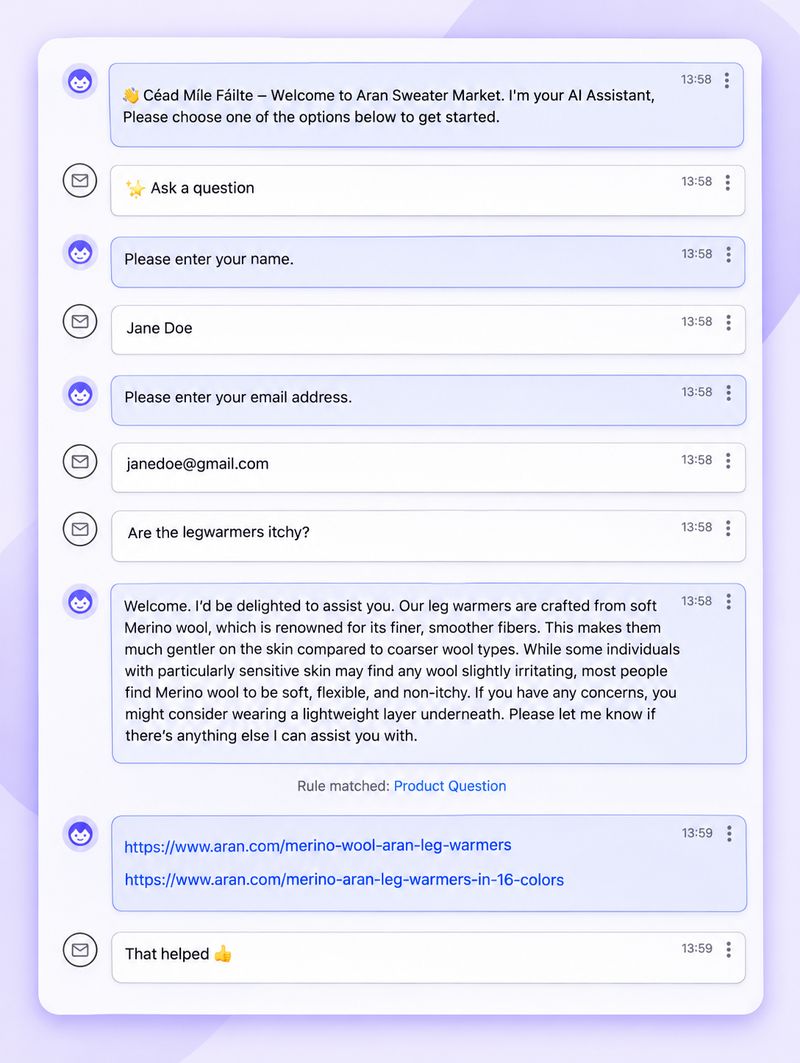
A good AI chatbot platform for eCommerce knows when to stop. It should hand the conversation to a person when the shopper is upset or asks for one, after two failed answers, and whenever a refund, dispute or damage claim needs a decision. The agent should receive the full chat and the order, so the shopper never repeats themselves.
Measure the bot weekly
Share of conversations fully resolved.
Share where the bot did not help.
Share where the shopper asked for a person.
A weekly read of a sample of transcripts, with fixes to the answers that went wrong.
Tell shoppers they are talking to AI: under the EU AI Act, people must be informed when they interact with a chatbot. Make "talk to a person" easy to find.
What to train it on first
Rank the last 90 days of tickets by intent and train your AI chatbot platform for eCommerce on the top few first. For many sellers that is order status, which eDesk estimates has 80 to 95% indicative automation potential, followed by returns and cancellations. Give the bot your order data, returns policy, shipping times by country, and product details for your best sellers. Our guide to training AI for customer support covers the data side.
Plan for peaks. eDesk's indicative benchmark puts the peak-season rise in tickets at 30 to 70%. On Black Friday, in Q4 and on marketplace sale days, a bot that answers order and delivery questions absorbs the extra volume without temporary hires. On Amazon, every reply still has to answer the buyer within 24 hours, weekends included, so check that the bot covers marketplace messages and not only webstore chat. eDesk's AI Agent works across webstore chat, email and marketplace messages from one place.
 Choosing your AI chatbot platform
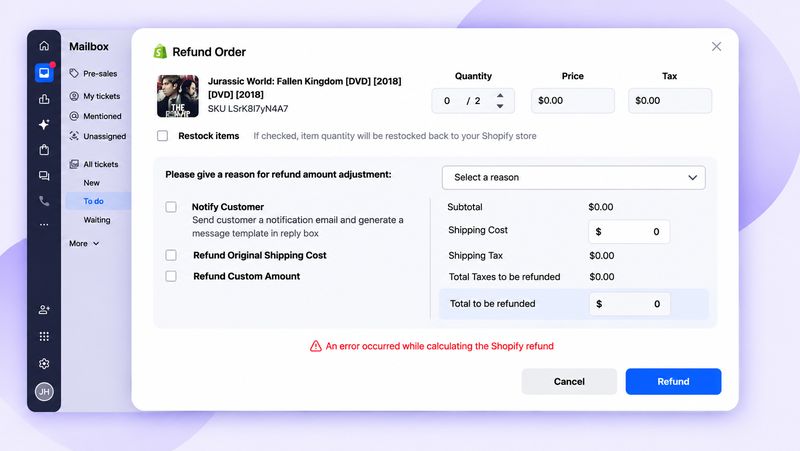
Shortlist two platforms that read live order data on the channels you sell on. Replay last quarter's tickets through both, price each at your own monthly volume using its real billing unit, and check how each hands over to a person. The AI chatbot platform for eCommerce that answers most of your real questions correctly, at a predictable cost in your busiest month, is the one to launch. Start with one intent, measure weekly, then expand to the next.
Frequently asked questions
1. What is an AI chatbot for eCommerce?
It is software that answers shoppers in chat and other channels using your product, policy and order data, and hands the conversation to a person when it cannot help.
2. What is the best AI chatbot for eCommerce stores?
The one that reads your live order data on every channel you sell on and passes a replay test on your own past tickets. Sellers on marketplaces should also check that the bot answers Amazon and eBay messages, not just webstore chat.
3. Which AI chatbot would you recommend for eCommerce?
Shortlist two that connect to your store and marketplaces, run both against last quarter's tickets, and compare cost using each vendor's billing unit at your volume.
4. Why do AI chatbots fail in customer service?
Most fail because they cannot see order data, answer outside their knowledge, or make it hard to reach a person. Testing on past tickets and clear handoff rules prevent most of this.
5. How much does an AI chatbot cost?
It depends on the billing unit. At 900 resolved conversations a month, per-outcome pricing at $0.99 costs $891 before seats; per-conversation pricing counts every conversation the bot replies to.
Key takeaways
Choose an AI chatbot platform for eCommerce by what it can do with live order data.
Replay last quarter's tickets before any customer sees a bot reply.
Compare billing units: per outcome, per resolution, per interaction or per conversation.
Cover post-purchase questions and marketplace messages, not only pre-sale chat.
Disclose the AI and keep the route to a person short.
Start for free and replay your own tickets through AI Agent in Safe Mode.
Author:
