The TL;DR
Your Klaviyo account knows your customer’s lifetime value, segment, and last 10 emails. Your helpdesk knows their open complaint, their refund history, and their tone of voice. Most brands run these as separate worlds, which means agents reply blind and marketing keeps emailing “Buy more!” to people who filed a complaint two hours ago. Connecting Klaviyo with eDesk closes the gap. Setup takes 15 to 30 minutes, no developer, and the data flows both ways from day one.
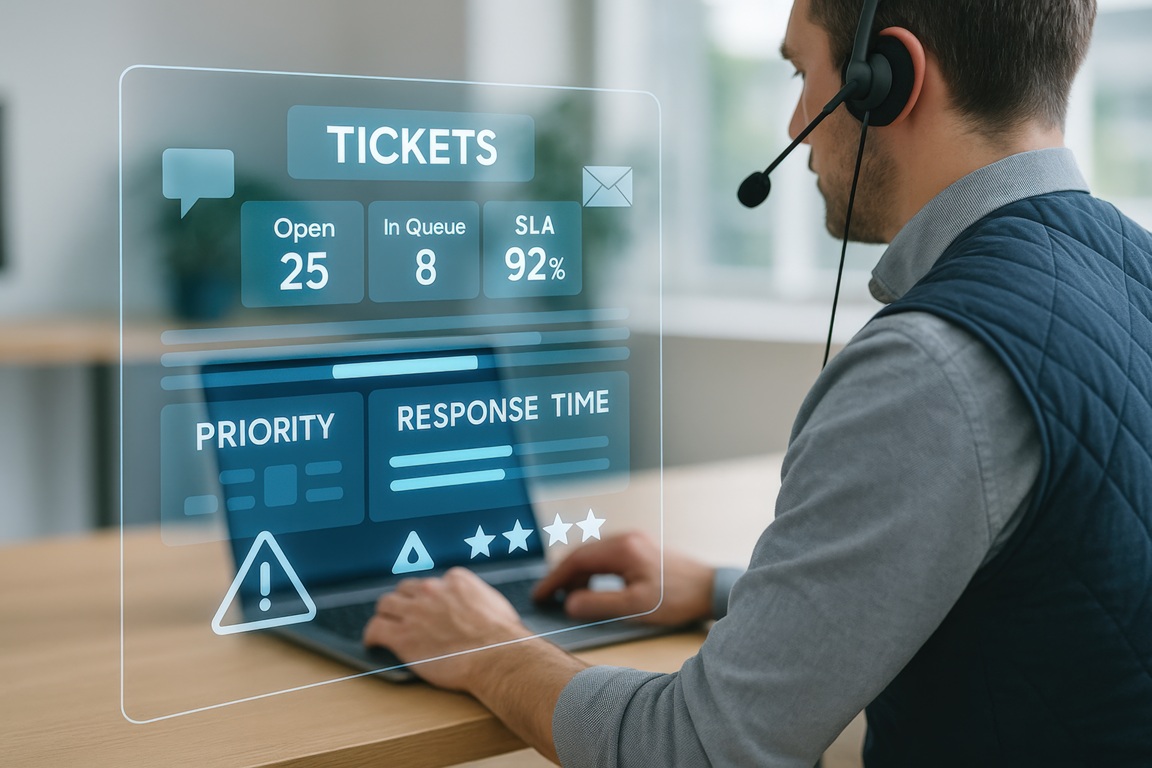
If you sell online in the UK, the picture below is probably familiar. Klaviyo holds your customer purchase history, email engagement, and segment data. Your helpdesk handles complaints, refunds, and pre-sales questions. Your support team can’t see one. Your marketing team can’t see the other. And your customer …gets the consequences of that.
This isn’t a small problem. It’s the operational reason promotional emails arrive ten minutes after a refund request. It’s why VIP customers wait in the same queue as everyone else. And it’s why support agents spend a meaningful chunk of every shift hunting for context that lives, somewhere, in another tab.
The fix is straightforward. Connect Klaviyo to eDesk. Marketing data appears inside support tickets. Support events trigger marketing flows. Both teams work from the same customer profile. Below is the practical version of how that looks.
Why Do Most UK eCommerce Brands Have a Marketing-Support Gap?
Marketing and support tend to grow as separate disciplines. Marketing buys Klaviyo to fix abandoned carts and run flows. Support buys a helpdesk to manage tickets. The two tools start in different rooms and rarely meet in the middle.
That works fine until the day a Klaviyo VIP segment customer files an Amazon A-to-Z claim. Or until your “we miss you” win-back campaign lands in the inbox of someone whose package arrived broken last Tuesday. Or until an agent spends five minutes flicking between systems to confirm whether the person they’re talking to is a £40 first-time buyer or a £4,000 lifetime regular.
Multiply that across hundreds of weekly tickets, and the cost stops being theoretical. Research from the American Psychological Association on task switching shows that constant tool-hopping can reduce productivity by up to 40%. Asana’s Anatomy of Work index found that employees switch between 10+ apps daily, costing roughly 3.6 hours per week in lost efficiency. For a support agent, that’s almost half a working day, every week, spent on reorientation rather than resolution.
What Klaviyo Actually Does (and Why UK Brands Use It)
Klaviyo is an email and SMS marketing platform built specifically for eCommerce. It connects to your storefront, watches what your customers do, and lets you send campaigns based on real behaviour: purchase history, browse activity, click patterns, lifetime value.
UK retailers use it to:
- Recover abandoned carts. The single highest-return automation in most eCommerce stacks.
- Build VIP segments. Klaviyo groups customers by lifetime value automatically.
- Run post-purchase flows. Onboarding, replenishment, cross-sell.
- Send personalised recommendations. Based on what each customer has bought and clicked.
The platform integrates natively with Shopify, BigCommerce, WooCommerce, and most major commerce systems. It updates customer profiles automatically, no manual entry.
The reason brands keep investing here: email still pays. Litmus and Omnisend both put retail and eCommerce email ROI at $45 for every $1 spent in 2026, the highest of any sector tracked, with the global cross-industry average sitting around $36. Omnisend’s 2026 data also shows automated emails making up roughly 2% of total sends but driving 30% of revenue. That’s the kind of ratio that justifies treating Klaviyo as core infrastructure, not a marketing nice-to-have.
But here’s the thing: that automation only works if it’s firing at the right people, at the right moment. Which is where the support data comes in.
The Real Cost of Keeping the Two Systems Apart
When marketing and support data sits in separate worlds, four things happen, and none of them are good.
Agents reply blind. Without Klaviyo data inside the ticket, your team can’t tell a £20 first-timer from a £4,000 VIP. Both get treated the same. Quite often that means the VIP gets generic service and quietly stops shopping with you.
Marketing tone goes wrong. Without ticket data inside Klaviyo, your “20% off, today only!” campaign goes out to the customer who’s mid-complaint about a broken item. They unsubscribe. Sometimes they post about it. Always damaging.
Support drowns in lookups. Every ticket starts with the same minutes-long hunt for purchase history, last contact, segment status. Agents reorientate dozens of times a day instead of solving problems.
Both teams duplicate work. Marketing builds VIP segments based on purchase data. Support manually identifies VIP customers based on conversation tone. Same outcome, two completely separate efforts.
McKinsey’s 2024 Personalization Report found that 76% of customers expect personalised support, and 71% are actively frustrated by generic service. The gap between marketing and support is one of the bigger reasons that frustration exists.
What Do You Actually Get When You Connect Klaviyo with eDesk?
Connecting eDesk’s Klaviyo integration creates a two-way data flow. Marketing data flows into tickets. Support events flow into Klaviyo. The result is one shared customer profile that both teams work from.
Five concrete outcomes:
- Personalised support, with full context. When a ticket arrives in eDesk, the customer’s Klaviyo profile is already attached: purchase history, email engagement, segment membership, lifetime value. Your agent doesn’t go hunting. They open the ticket, see the picture, and reply.
- Smarter retention triggered by support events. A resolved complaint can fire a thank-you-with-discount flow in Klaviyo. A refund request can pause promotional emails for 14 days automatically. Marketing tone stays appropriate without anyone manually flagging anything.
- Revenue visibility inside the ticket. Order values and lifetime value sit on screen, not in a separate tab. Agents adjust their approach based on the actual stakes.
- Faster resolution. Removing the lookup step is the highest-impact productivity gain in modern customer service. Tools that surface context automatically, rather than forcing agents to find it, consistently cut handle time.
- GDPR compliance, by default. Both platforms meet UK GDPR requirements. The integration respects opt-outs and handles deletion requests automatically. If a customer unsubscribes from marketing in Klaviyo, your support team sees that and avoids referencing campaigns in their replies.
Workflows UK Sellers Run on This Setup
Five flows that come up repeatedly with UK eCommerce teams running this stack.
Abandoned Cart Recovery, With Support in the Loop
Klaviyo’s abandoned cart sequence sends three or four reminder emails. If the customer doesn’t convert and instead reaches out to support with a question, eDesk shows the agent exactly which products were abandoned. The agent answers the question and helps complete the purchase, becoming a natural extension of the recovery sequence rather than a parallel process.
VIP Routing Without Manual Tagging
Klaviyo identifies VIP customers by lifetime value automatically. eDesk reads the segment tag and flags the ticket as high priority before any agent touches it. Your best customers don’t sit in a queue with everyone else. They surface at the top of the Smart Inbox, where senior agents can pick them up first.
Post-Resolution Loyalty Flows
When eDesk closes a technical support ticket, it can tag the customer profile in Klaviyo. That tag triggers a follow-up email sequence with helpful resources or related product recommendations. Customers get proactive aftercare. Your team doesn’t lift a finger. And given that automated emails drive a disproportionate share of total email revenue, post-resolution flows pay back unusually well for the effort involved.
Stopping Tone-Deaf Marketing in Its Tracks
When eDesk records a complaint or refund, it adds a temporary tag to the Klaviyo profile that excludes that customer from promotional sends for a defined window. No more “Restock alert!” emails to people who just sent back a broken item. This single workflow prevents more brand damage than most retention strategies generate goodwill.
Product Feedback Loops
Tickets mentioning specific product issues get tagged in eDesk. Klaviyo uses those tags to send structured surveys to the customers who already raised concerns. Product teams get prioritised feedback based on emotional impact, not just frequency. Customers feel heard.
Success Story: Sennheiser used eDesk to consolidate marketplace messages, email, and chat into one inbox across Europe, with marketing-aware ticket prioritisation built into the same workflow.
How Do You Set Up the Klaviyo and eDesk Integration?
Setup is genuinely 15 to 30 minutes. No developer needed.
Step 1: Authorise Klaviyo in eDesk. Log into eDesk → Settings → Integrations → Klaviyo → Connect. Authorise access in Klaviyo, then return to eDesk. Done.
Step 2: Map your data fields. Choose which Klaviyo fields appear inside eDesk tickets. Most teams start with total revenue, number of orders, last purchase date, email engagement score, and segment membership. Add or remove based on what your agents actually use.
Step 3: Configure event triggers. Decide which eDesk actions should send data back to Klaviyo. Common picks: ticket resolved, refund processed, VIP tag added, complaint logged, product issue recorded. Each event updates the customer profile and can trigger flows on the Klaviyo side.
That’s it. Your team is operating with shared context the same afternoon you set it up.
How Does This Compare to Other Klaviyo Helpdesk Integrations?
Not all integrations work the same way. Here’s how eDesk stacks up against typical alternatives for UK multichannel sellers.
| Feature | eDesk + Klaviyo | Generic Helpdesks | No Integration |
| Native Klaviyo connection | Built-in | Often needs third-party connector | None |
| Marketplace coverage | Native to 300+ channels | Limited or none | N/A |
| Klaviyo data inside tickets | Automatic profile sync | Depends on connector | Manual lookup |
| Two-way sync (support → marketing) | Yes, event-based triggers | Often one-way only | Manual data entry |
| UK GDPR compliance | Built-in | Varies | Manual management |
| Setup time | 15–30 minutes | 30–60+ minutes via connectors | N/A |
| eCommerce AI features | AI Agent, Smart Inbox, Chatbot | General-purpose AI | None |
Disclosure: This article is published on edesk.com and eDesk is included in this comparison. We evaluated all platforms using the same criteria and based assessments on publicly available product information and direct product knowledge. Pricing and features were verified as of April 2026 but may change. We encourage readers to trial multiple platforms and verify current capabilities directly with vendors before making a purchasing decision.
eDesk’s edge isn’t the integration alone. It’s the combination of native Klaviyo data plus native marketplace coverage. For a UK multichannel seller running Amazon, eBay, Shopify, and direct-to-consumer email side by side, that combination genuinely consolidates work. Generic helpdesks force you to rebuild marketplace connectivity through middleware, then bolt Klaviyo on through another connector. eDesk does both natively.
The eDesk AI Agent layered on top automates up to 65% of support across every channel, with Klaviyo data in the prompt. Which means automated replies are smarter, because they draw on actual purchase history and engagement patterns instead of guessing.
Common Mistakes to Avoid
Four traps come up consistently. Worth knowing before you set things up.
- Over-relying on automation without review. Trigger a flow, sure. But test what it sends. Read it as the customer would. Automated thank-you-with-discount emails that arrive five minutes after a refund are technically firing correctly and still landing wrong.
- Skipping GDPR configuration. UK businesses must follow ICO rules. Configure the integration so it respects opt-outs end to end. If a customer turns off marketing emails in Klaviyo, your support team should see that flag and avoid referencing campaigns in their replies.
- No agent training on Klaviyo data. The richest customer profile in the world is useless if agents don’t know how to read it. Run a 30-minute training session showing where each data point lives in the ticket and how to interpret engagement scores. Build a quick reference guide for common scenarios.
- Not measuring what changes. Track average ticket resolution time, CSAT, and revenue from post-ticket campaigns before and after implementation. If those numbers don’t move, the integration isn’t doing its job and you need to find out why.
Key Takeaways and Action Plan
Three principles from the comparison:
- The biggest productivity win is removing the lookup step. Agents who see customer context automatically resolve tickets faster than agents who hunt for it. That’s where most of the ROI lives.
- Two-way sync matters more than one-way. Marketing seeing support events stops the tone-deaf email problem. Support seeing marketing data stops the blind-reply problem. Both directions are needed.
- Configuration beats raw capability. A native integration that’s set up wrong delivers less than a manual workflow that’s run carefully. Spend 30 minutes on the field mapping and trigger configuration.
Your Action Plan:
- List the top 10 questions your support team gets weekly. Identify how many would be faster to answer with full Klaviyo context attached.
- Audit your current Klaviyo flows for the worst possible recipient list (recently complained, recently refunded, recently negative review). Configure exclusion tags before turning the integration on.
- Run a 14-day pilot. Measure median ticket resolution time and Klaviyo flow performance before and after. If both don’t improve, dig into why.
- Train your team. The integration is only as useful as the people reading the data it surfaces.
For wider context on the metrics that move when support and marketing are properly aligned, our breakdown of eCommerce customer service statistics shows where 2026 expectations are landing across response time and personalisation.
Ready to see how Klaviyo data looks running inside eDesk on your sales channels? Book a Free Demo, and we’ll walk you through the setup, the workflows, and the unified eCommerce inbox your team will actually be using.
Frequently Asked Questions
What data does Klaviyo share with eDesk?
Customer purchase history, order values, email engagement metrics, segment membership, and any custom properties you configure. All of it appears inside the ticket itself, so agents get full context without leaving the helpdesk.
Is the integration GDPR-compliant for UK businesses?
Yes. Both platforms meet UK GDPR requirements. The integration respects consent preferences, handles deletion requests, and maintains secure data transfer between systems. You still own the responsibility for following ICO rules in your wider marketing and support practices.
Does it work with Shopify, BigCommerce, and WooCommerce?
Yes. Both Klaviyo and eDesk connect independently to Shopify, BigCommerce, WooCommerce, and the major commerce platforms. They then share customer data through their direct integration, regardless of which storefront you’re running.
How do support tags trigger Klaviyo email flows?
When agents add tags in eDesk (for example “complaint resolved” or “VIP”), those tags sync to the customer’s Klaviyo profile. You then build flows in Klaviyo that fire when specific tags appear, sending targeted emails based on what happened in the support conversation.
How long does setup take?
15 to 30 minutes for most teams. Authorise the connection in eDesk Settings, map your data fields, configure your event triggers. No developer involvement.
Will this slow down my support team?
It does the opposite. Agents stop searching for customer data and start using it. Most teams see resolution times drop within the first month.
How does this compare to other Klaviyo helpdesk integrations?
eDesk’s combination of native Klaviyo sync, two-way event triggers, native marketplace integration across 300+ channels, and built-in eCommerce AI is what separates it from generic helpdesks. Most alternatives need third-party connectors for either Klaviyo or marketplaces, often both.