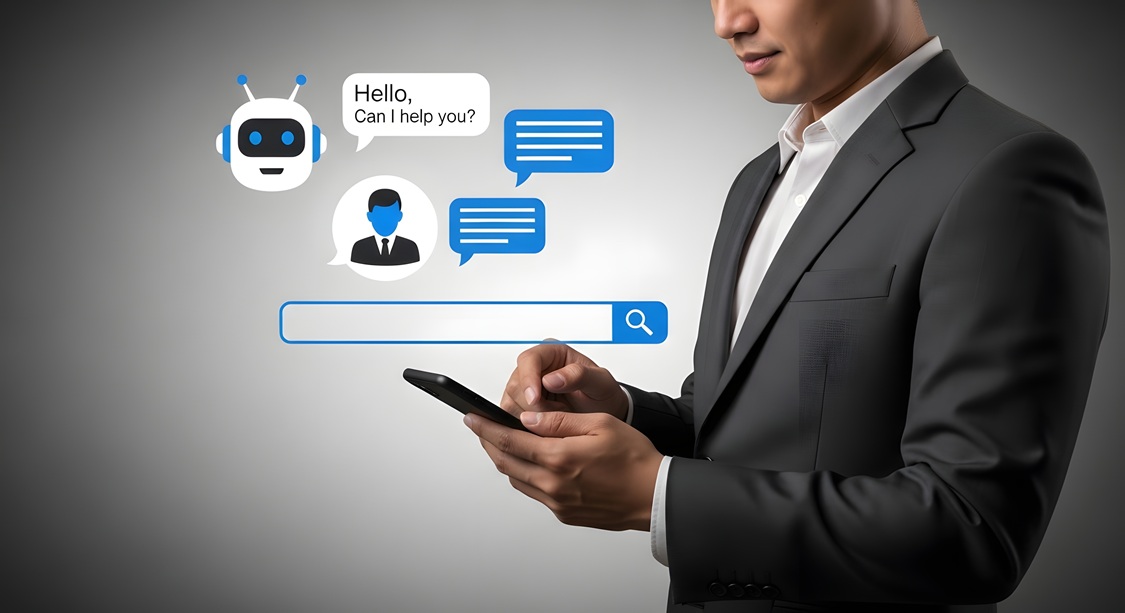
Can AI deliver support interactions that are not just fast, but genuinely human? Short answer: yes. Slightly longer answer: only when the AI is given the memory, context, and emotional cues that humans use without thinking. Without those, AI is just a faster way to be impersonal.
Good news: the technology is finally there. The 2026 examples below show exactly what ‘human-like’ looks like when AI is wired into your eCommerce data properly.
TL;DR: The Short Answer
Modern AI customer support feels human when it has memory of past interactions, detects sentiment in real time, hands off cleanly to humans for complex issues, communicates proactively before customers complain, and responds in the customer’s native language. The five examples below show how each one works in practice, with eDesk as the platform that wires them together for eCommerce sellers.
1. Contextual Greetings and Memory
Few things feel more impersonal than being asked for information the company already has. The customer’s name. Their order number. The thing they emailed about last Tuesday. Each question is a small reminder that the brand isn’t paying attention.
Human-like AI removes that friction by greeting the customer with the context already loaded.
The example: a shopper returns to your website chat after emailing you a week ago about a shipping address change. Instead of a sterile ‘How can I help you?’, the AI opens with: ‘Welcome back, Anna. Last week we were sorting out your shipping address change. Did that get resolved, or is there something new today?’
It works because the AI is plugged into the same data the helpdesk is pulling from: ticket history, CRM records, prior conversations across every channel. eDesk’s Smart Inbox gives the AI that full picture the moment the chat opens, so the conversation feels like a continuation, not a cold start.
The cumulative effect is small per interaction, large in aggregate. Customers stop having to repeat themselves. The brand starts feeling competent.
2. Real-time Sentiment-Based Tone Adjustment
True empathetic AI doesn’t just process what a customer is saying. It picks up how they’re saying it. Then it adjusts.
Imagine a customer typing in all caps about a delivery that hasn’t arrived. Frustrated. Possibly furious. A generic ‘How can I help you?’ would be the wrong opening. Sentiment-aware AI detects the heat in the language and responds in kind: ‘I’m really sorry about the delay. I’m pulling up the tracking right now and will get you an update straight away.’
Apologetic. Action-oriented. No corporate fluff.
The mechanism is straightforward in concept and impressive in execution. Natural language models trained on emotional cues classify the message (frustrated, neutral, celebratory, confused) and select a response template with the matching register. This kind of capability matters because the empathy gap is real: a recent Harvard Business Review piece argues that AI is more likely to amplify an empathy deficit than fix it, unless the deployment is deliberate. Sentiment-aware response selection is one of the few places where AI quietly does the right thing without being asked.
The bigger point: empathy at scale isn’t about pretending to be human. It’s about not being tone-deaf. AI that reads the room is already doing more than most generic chatbots ever managed.
3. Intentional Handover to Human Agents
A robot that knows when to step aside feels more human than one that stubbornly tries to muddle through. Counter-intuitive, but true.
The best AI handovers look like this: a customer asks an increasingly technical question about a product feature. Three turns in, the AI realises it’s out of its depth. Instead of generating a confident-sounding answer that might be wrong (the LLM cardinal sin), it says: ‘Great technical question. I’m going to bring in Sarah from the product team, who’ll have the full conversation already and can take it from here.’
Two things make this work:
- The AI knows when to quit. Confidence scoring drops below a pre-set threshold, and the system auto-escalates rather than freelancing.
- The handover carries context. Sarah doesn’t open the ticket cold. She gets the full transcript plus a summarised intent (something like ‘Intent: Technical setup query for Product X, customer mildly frustrated, has tried two reboots’). She picks up where the AI left off.
The customer, crucially, only had to explain once. To see how this kind of triage shapes the broader workflow, our eCommerce automation guide walks through the routing logic in detail.
4. Proactive Outbound Empathy
The most human kind of support is support that arrives before the customer has to ask. Which sounds idealistic until you see it deployed at scale, at which point it starts looking obvious.
A worked example: your warehouse flags a 48-hour shipping delay on a popular SKU. Within minutes, the AI identifies every customer who ordered that item in the relevant window and sends each one a short, personalised note explaining the delay, the new expected delivery date, and (if you want to soften the landing) a small apology discount for next time.
The customer doesn’t have to chase. They don’t even have to notice the delay first. The first thing they hear from your brand is the explanation, not the excuse after the complaint.
This is where AI stops being a labour-saving tool and starts being a brand asset. A wave of potentially angry inbound tickets becomes a moment of transparency. Trust gets built rather than repaired.
The technical lift is modest if your data is already centralised. AI monitoring tools watch for triggering events (inventory alerts, carrier exceptions, payment failures), match them to affected customers, and dispatch personalised messages from your existing templates. eDesk’s AI features handle this kind of proactive workflow natively.
5. Instant Multilingual, Localized Support
Few experiences feel more isolating than being forced to write to a brand in a language you don’t speak well. Or having to use Google Translate to read their reply. Or both.
The numbers behind this aren’t subtle. According to CSA Research, 76% of online shoppers prefer to buy from sites that present information in their native language, and 40% say they’ll never buy from a site in another language. Which makes multilingual support a revenue lever, not just a CX nice-to-have.
How it plays out in practice: a customer in Munich messages your Amazon store in German. The AI detects the language, translates the message into English for your London-based agent, the agent drafts a reply in English, and the AI translates it back into idiomatic German before the customer ever sees it. No awkward Google Translate stutter. No staffing a 24-hour multilingual team.
The quality bar has risen sharply too. Modern LLM-based translation handles nuance, idiom, and product terminology in ways that the old translation overlays could not. This is the difference between sounding like a brand and sounding like a slightly broken software manual.
To handle this end-to-end across Amazon, eBay, and your direct store, you need a centralised platform like the eDesk Amazon integration that handles the channel mapping behind the scenes.
Success Story: Audio brand Sennheiser centralized support across multiple regions and languages using eDesk, scaling global service without scaling the headcount required to deliver it.
How Do AI-Native Helpdesks Compare?
The AI customer service market is loud right now. Every vendor claims human-like AI, sentiment analysis, and multilingual support. The actual question is which platforms ship those capabilities natively, in production, with eCommerce data flowing through them by default.
Evaluation Criteria:
- Memory and context: Does the AI access ticket and order history automatically, or does it need to be told?
- Sentiment analysis: Is it built in, an add-on, or a third-party integration?
- Handover quality: How much context transfers when the AI hands off to a human?
- Multilingual coverage: Native LLM-based translation or older statistical translation overlays?
- Proactive triggers: Can the system initiate outbound messages based on inventory, carrier, or payment events?
| Capability | eDesk | Zendesk AI | Freshdesk Freddy | Intercom Fin | Help Scout |
| Auto-loaded customer memory | Native | Yes | Limited | Yes | Limited |
| Sentiment-based tone adjustment | Built-in | Add-on | Add-on | Built-in | Limited |
| Smart handover with full context | Yes | Yes | Yes | Yes | Manual |
| Native multilingual | LLM-based | Translation overlay | Translation overlay | LLM-based | Limited |
| Proactive outbound triggers | Native (eCommerce events) | Workflow-dependent | Limited | Configurable | Manual |
| Best for | Multi-channel eCommerce | General enterprise | Cost-conscious SMBs | SaaS-first companies | Small focused teams |
Disclosure: This article is published on edesk.com, and eDesk is included in this comparison. We evaluated all platforms using the same criteria and based assessments on publicly available product information, published user reviews, and direct product knowledge. Pricing and feature details were verified as of May 2026 but may change. We encourage readers to trial multiple platforms and verify current capabilities directly with vendors before making a purchasing decision.
For a wider category breakdown, our roundup of the best Shopify helpdesk software covers how these AI capabilities map to merchant needs at different stages of growth.
Key Takeaways and Next Steps
The point of all five examples isn’t to fool customers into thinking they’re talking to a human. It’s to use AI to make the experience feel respectful, contextual, and competent. Customers don’t actually mind interacting with AI. They mind interacting with AI that wastes their time.
That distinction matters more than ever in 2026. According to SurveyMonkey’s consumer AI research, 14% of consumers say they’d lose trust in a business that uses an AI agent without disclosing it. Which means the question isn’t whether to use AI; it’s whether to use it transparently and well.
Your Action Plan:
- Audit your AI’s memory. Open a test ticket as a known customer. Does the AI greet you with relevant context, or start from zero?
- Map your top three frustration triggers. Identify which ticket types most often involve angry language. These are the queues where sentiment-based responses pay off first.
- Define your handover threshold. Decide what level of complexity triggers a switch to a human, and make sure the full transcript transfers automatically.
- Build one proactive trigger. Pick one event (shipping delay, out-of-stock, payment failure) and set up an automated, personalised outbound message for affected customers.
- Test in your top non-English market. Send a real query in your second-largest customer language and see what comes back. The gap between OK and excellent is usually obvious within 30 seconds.
To see all five examples wired into one platform built specifically for eCommerce, Book a Free Demo and we’ll show you what the experience looks like with your own marketplace data.
Frequently Asked Questions
Is it actually fine for customers to know they’re talking to AI?
Yes, and the evidence supports being upfront about it. Transparency is the trust-builder, not the trust-breaker. Customers don’t mind the technology, they mind being misled about it. Make sure there’s a clear, easy path to a human agent for anything that needs one, and most customers are perfectly happy with AI handling the rest.
Does my AI need to be funny or have a personality?
Not really. The qualities that matter most are context, memory, and emotional awareness, not jokes. Consistency and helpfulness will outperform forced personality every time. A good AI sounds like the brand at its calmest and most competent, not a stand-up comedian.
How do I train AI to use my specific brand voice?
Modern AI platforms let you train the model on your best human chat transcripts and your written style guide. Over time, the AI learns your voice (the contractions you use, the phrases you avoid, the tone you take with VIP customers) and applies it consistently. Most teams see a recognisable voice match within a few weeks of fine-tuning.
What happens when the AI gets something wrong?
Two things, ideally. First, the system flags the conversation for review so you can correct the underlying knowledge gap. Second, a human agent steps in to clean up the customer-facing situation. Errors should be learning data, not silent failures.
Can AI handle high-emotion situations like complaints or refund disputes?
It depends on the complexity. AI can absolutely de-escalate the opening exchange (apologise, acknowledge, gather facts) and that alone takes a real load off your team. For the actual resolution of a high-value or sensitive case, the right move is usually a quick handover to a human agent with the full context already loaded.
Ready to see what AI-powered support looks like when it’s built specifically for eCommerce? Book a Free Demo and we’ll walk through how eDesk handles memory, sentiment, handover, and multilingual support across all your channels.