Is Shipping Part of Customer Service?
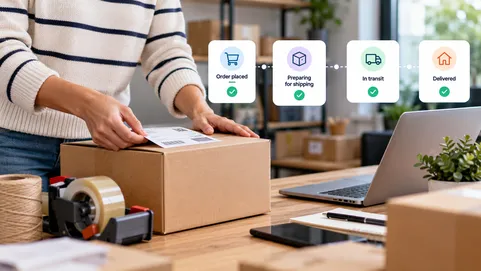
A customer doesn't separate "the product" from "the delivery" when they decide how they feel about your brand. The shipping experience is part of the service, whether or not your org chart treats it that way.
TL;DR
Shipping is a customer service function, measured on the same four things any support interaction is: communication, accuracy, speed and cost, and what happens after delivery
Consistent, proactive updates do more for customer trust than fast delivery alone
Fast and cheap shipping without accuracy is a false economy, since every error becomes a support ticket
Exceptional service can beat fast delivery outright when the six fundamentals, from using the right channels to staying personal, are in place
Post-delivery service, not the delivery itself, is where loyalty actually gets built
Consistent Communication With the Customer
From the moment a customer clicks "submit purchase," they're watching for updates on where their order is. Silence between checkout and delivery is what turns a normal wait into a support ticket. A clear, proactive update at each real milestone, confirmed, shipped, out for delivery, does more to keep that customer calm than any individual update does on its own. Our guide on automating WISMO inquiries covers how to build that proactive layer so the update reaches the customer before they have to ask for it.
Accuracy and Quality
The transactional side of a sale is its own chance to impress, or disappoint, a customer. The right item, correctly packed, arriving in the condition it left the warehouse in, is the baseline a customer assumes they're getting. Fall short of it and the goodwill a brand built through the rest of the buying experience gets undone by a single wrong or damaged item.
Speed and Cost of Service
How quickly an order moves matters, but it's not the only variable a customer is weighing. Shipping cost sits right alongside speed in a customer's decision, and a seller who blankets everything in free shipping without thinking through the returns it creates can find that volume eating the margin free shipping was meant to protect.
How Exceptional Service Beats Fast Delivery
Speed has a ceiling. Once a delivery is reasonably fast, the thing that actually differentiates one seller from another is what the service around that delivery feels like, and that's less about logistics and more about how a brand treats the customer at every touchpoint along the way.
Use the Right Channels
Customers don't all want to reach you the same way. Meeting them on the channel they already prefer, rather than funnelling everyone into one inbox, is the first fundamental.
Be Honest From the Start
Honesty from the very first touchpoint, about timelines, about stock, about anything that could go wrong, costs less trust than a surprise does later.
Think Customer Success as Well as Customer Service
eCommerce has blurred service into experience, and increasingly into customer success: helping a customer get the outcome they actually wanted, not just answering the question they asked.
Stay in Touch
Whether the promise is same-day or standard delivery, the customer expects the same consistent, personalised contact either way.
Be Personal
Personalisation isn't optional anymore. A generic, templated reply makes a brand sound like it doesn't know who it's talking to.
Build Customer Loyalty
Every touchpoint is a small deposit into loyalty, but only if the brand has the resources and process to actually manage that volume of contact without it feeling automated.
Post-Delivery Customer Service
Service doesn't end when the package arrives. What happens after delivery, how a return is handled, how a damaged-item complaint is resolved, and how quickly a follow-up question gets answered are often what a customer actually remembers about the brand, more than the delivery itself.
So, What's the Takeaway for eCommerce Sellers?
Shipping is a chance to impress customers and keep them coming back, not just a logistics line item to minimise costs. Treat communication, accuracy, speed and cost, and what happens after delivery as four parts of the same customer service function, because that's how the customer experiences them.
Frequently asked questions
Is shipping part of customer service? Yes. The customer does not separate the product from the delivery when deciding how they feel about a brand, so the shipping experience is judged as part of the service regardless of how the business splits the two internally. In practice it is measured on the same four things as any support interaction: communication, accuracy, speed and cost, and what happens after delivery.
What should a shipping update actually say? It should confirm a real milestone the customer cares about, order confirmed, order shipped, out for delivery, and reach them before they have to ask. Updates that fire on internal events the customer cannot act on add noise without reducing contact.
Does free shipping improve customer service? Not on its own. Free shipping removes a cost objection at checkout, but blanket free shipping and free returns can generate return volume that eats the margin it was meant to protect. Treat it as a commercial decision with a service consequence, not as a service improvement by itself.
Can good customer service make up for slow delivery? Up to a point, yes. Once delivery is reasonably fast, further speed gains matter less than the quality of the service around the delivery. Honest timelines set at the point of sale, consistent contact during the wait, and fast resolution afterwards do more than shaving a day off transit.
What counts as post-delivery customer service? Everything that happens after the package arrives: returns handling, damaged-item claims, replacement dispatch, and follow-up questions. It is the stage where the brand already has the customer's money, which is exactly why how it behaves there is what the customer remembers.
Should support or logistics own shipping communication? Whoever owns it, the customer sees one brand. The practical answer is that logistics owns the data and support owns the message, which only works if the tracking and order data is visible inside the ticket rather than in a separate system an agent has to go and look up.
Author:
