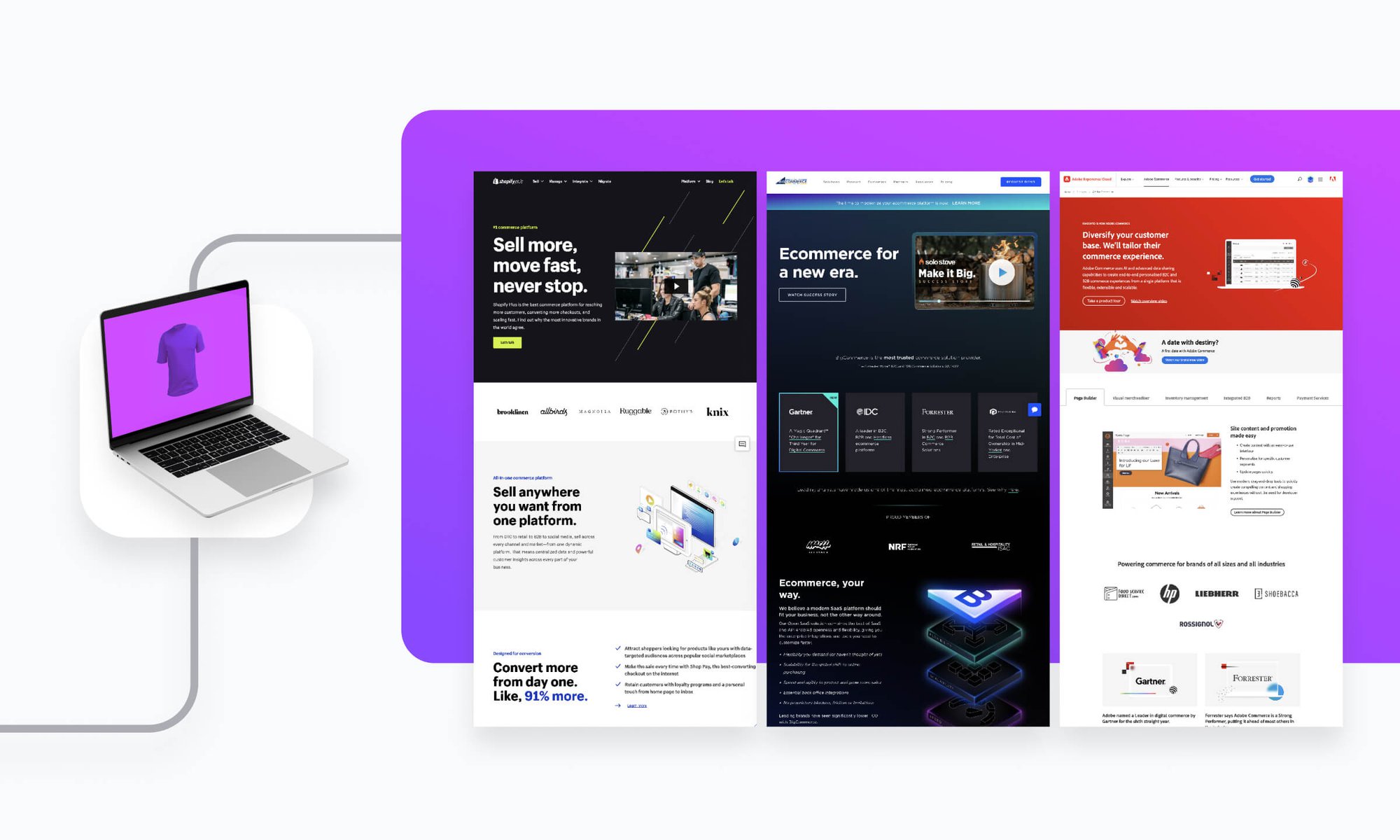
Headless eCommerce trennt Ihre Storefront (Frontend) von Ihren Backend-Operationen und verbindet sie über APIs. Diese Architektur gibt Ihnen völlige Gestaltungsfreiheit und gewährleistet gleichzeitig eine robuste Auftragsabwicklung. Im Jahr 2026 nutzen 73% der Unternehmen eine Headless-Architektur, und Unternehmen, die Headless Commerce implementieren, berichten von einer durchschnittlichen Steigerung der Konversionsraten um 42%. Der weltweite Markt für Headless Commerce wird von 1,74 Milliarden Dollar im Jahr 2025 auf 7,16 Milliarden Dollar im Jahr 2032 anwachsen. Zu den führenden Lösungen gehören Shopify Plus (Hydrogen + Oxygen) für etablierte Shopify-Händler, BigCommerce für die Flexibilität im mittleren Marktsegment, Adobe Commerce für die Anpassung an die Bedürfnisse von Unternehmen und Commercetools für reinen API-first Composable Commerce. Unternehmen mit Omnichannel-Strategien binden 89% der Kunden an sich, verglichen mit 33% bei Single-Channel-Ansätzen.
Wir haben mit Hunderten von eCommerce-Unternehmen zusammengearbeitet, die mit dem gleichen Problem zu kämpfen haben: Sie wollen eine einfache Designänderung vornehmen und hoffen, dass das Kassensystem intakt bleibt. Oder sie wollen über Sprachassistenten, soziale Medien und mobile Apps verkaufen, während ihre aktuelle Plattform jeden Kanal wie ein eigenes Universum behandelt.
Headless eCommerce löst diese Probleme. Der weltweite eCommerce-Umsatz erreicht 6,88 Billionen Dollar im Jahr 2026brauchen Unternehmen eine Architektur, die sich an den Ort anpasst, an dem ihre Kunden einkaufen. In diesem Leitfaden erfahren Sie, was Headless Commerce ist, warum die Akzeptanz zunimmt und welche Plattformen die besten Ergebnisse für unterschiedliche Geschäftsanforderungen liefern.
Was sind Headless eCommerce Lösungen?
A headless eCommerce platform separates the frontend of your online store from the backend. You change your product pages and user interface without touching your order processing, inventory management, or shipping systems.
The frontend presentation (templates, themes, user experience) operates independently from the backend infrastructure that powers the store. This decoupled architecture lets companies use their preferred frontend technology while integrating their chosen backend eCommerce solution for core functionality.
Think of it like a restaurant where the dining room (frontend) and kitchen (backend) operate independently but communicate through servers (APIs). The chef can change the menu without remodeling the dining room. The manager can redesign the space without affecting how food gets prepared.
The headless approach gives businesses the flexibility and agility needed to provide outstanding customer experiences across every touchpoint.

Warum Headless Commerce-Plattformen im Jahr 2026 dominieren werden
Die Verlagerung hin zu Headless-Commerce-Plattformen spiegelt die grundlegenden Veränderungen in der Art und Weise wider, wie Kunden einkaufen und wie Unternehmen im Wettbewerb stehen.
Current Adoption Rates
Die Zahlen sprechen eine deutliche Sprache. Laut dem Bericht State of Headless 2024, 73% aller Unternehmen verwenden jetzt eine Headless-Website-Architektur, was einem Anstieg von 14 % gegenüber 2021 entspricht. Von denjenigen, die derzeit noch nicht mit Headless arbeiten, planen fast 98%, innerhalb der nächsten 12 Monate Headless-Lösungen zu evaluieren.
Der Markt spiegelt diese Nachfrage wider. Der weltweite Markt für Headless Commerce erreichte im Jahr 2025 1,74 Milliarden Dollar und wird bis 2032 mit einer durchschnittlichen jährlichen Wachstumsrate von 22,4% auf 7,16 Milliarden Dollar anwachsen.
Measurable Performance Gains
Die Headless-Architektur liefert quantifizierbare Verbesserungen bei den wichtigsten Kennzahlen:
Die Konversionsrate steigt: Unternehmen, die Headless Commerce einführen, berichten von einem durchschnittlichen Anstieg der Konversionsraten um 42%. Die britische Bekleidungsmarke White Stuff hat ein 37% Steigerung die Konversionsraten nach der Umstellung auf eine Headless-Architektur.
Schnellere Ladezeiten: Headless-Implementierungen berichten von einer 20%igen Rückgang bei den durchschnittlichen Ladezeiten von Websites. Untersuchungen bestätigen, dass jede Verbesserung der Seitenladezeit um 1 Sekunde zu einer Steigerung der Konversionsrate um 2 % führt.
Geringere Absprungraten: Unternehmen, die Headless-Architekturen verwenden, beobachteten eine 23% weniger bei den Absprungraten, was auf eine verbesserte Benutzerbindung hindeutet.
Omnichannel Excellence
Die Fähigkeit, über alle Kanäle hinweg konsistente Erfahrungen zu bieten, fördert die Akzeptanz. Forschung zeigt 82% der Befragten stimmen zu, dass eine Headless-Architektur die Bereitstellung konsistenter Inhalte über alle Kanäle hinweg vereinfacht.
Das ist wichtig, denn Kunden interagieren mit Marken über das Internet, das Mobiltelefon und neue Touchpoints gleichzeitig. Unternehmen mit Omnichannel-Strategien behalten im Durchschnitt 89% der Kunden, verglichen mit 33% für Unternehmen mit schwachem Omnichannel-Engagement.
Scalability and Speed to Market
Die Architektur trennt die einzelnen Bereiche, so dass jede Komponente leichter unabhängig skaliert werden kann:
- 79% of headless users rate their scalability as strong versus 62% on traditional platforms
- 80% of survey respondents feel their organization is ahead of competitors when delivering new digital experiences
- Headless commerce reduces time-to-market for new features by up to 50%
Future-Ready Infrastructure
Die Prinzipien der MACH Alliance (Microservices, API-first, Cloud-native, Headless) bilden die Grundlage für modernen Handel. Die MACH Alliance berichtet, dass 92 % der US-Marken irgendeine Form von Composable Commerce eingeführt haben, weitere 21 % planen die Einführung innerhalb des Jahres.
Top Headless eCommerce Lösungen für 2026
1. Shopify Plus (Wasserstoff+Sauerstoff)
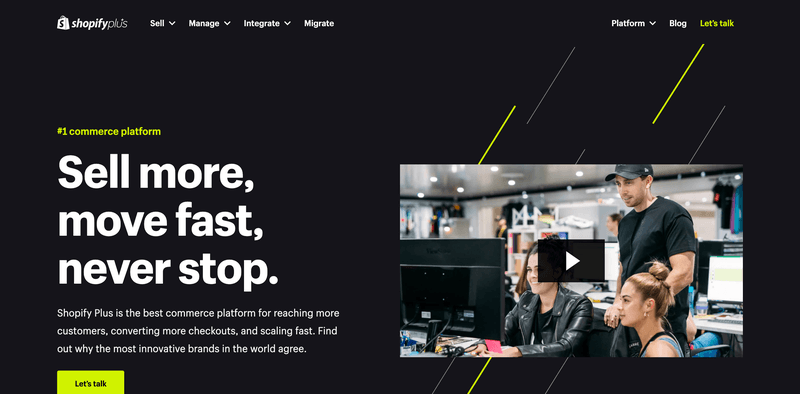
Am besten für: Etablierte Shopify-Händler, die bereit für mehr Freiheit im Frontend sind
Das Headless-Angebot von Shopify kombiniert Hydrogen (ein React-basiertes Framework) mit Oxygen (globales Hosting), um Ihnen die vollständige Kontrolle über das Design zu geben und gleichzeitig das bewährte Backend von Shopify beizubehalten. Marken wie Babylist, Ruggable und Figs haben Headless Shopify-Setups verwendet, um schnelle, inhaltsreiche Storefronts zu erstellen.
Wichtige Merkmale:
- React-based custom storefront development
- Global CDN hosting through Oxygen
- Full access to Shopify’s ecosystem and app store
- Seamless checkout and payment processing
- Native Shopify integrations with support tools
Preisgestaltung: Ab $2.000+ pro Monat
2. BigCommerce
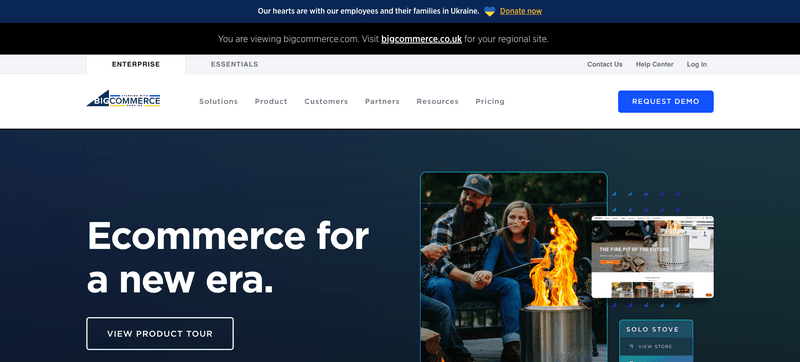
Am besten geeignet für: Mittelständische Unternehmen, die Flexibilität ohne Kopfschmerzen bei der Infrastruktur wünschen
BigCommerce bietet robuste Headless-Commerce-Funktionen über seine API-first SaaS-Plattform. Marken wie Discount Electronics, Black Diamond und Gorewear haben BigCommerce für Headless Builds eingesetzt, um die Leistung zu verbessern und die Integration zwischen den Systemen zu optimieren.
Wichtige Merkmale:
- REST and GraphQL APIs for frontend flexibility
- Pre-built integrations with popular tools
- 99.99% uptime guarantee
- No transaction fees on any payment gateway
- Native BigCommerce integration with customer service platforms
Preisgestaltung: Ab $29 pro Monat, Preise für Unternehmen verfügbar
3. Adobe Commerce (Magento)
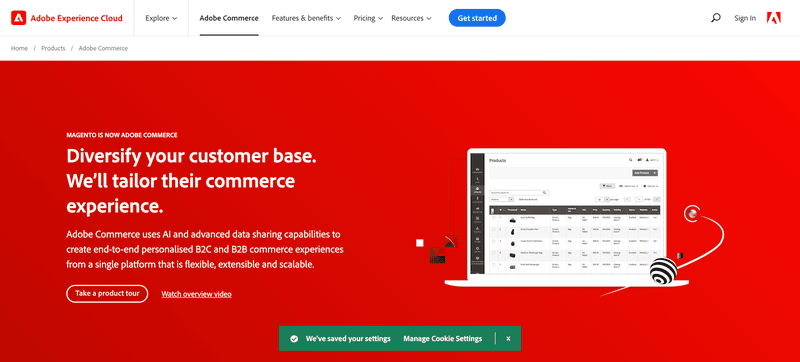
Am besten geeignet für: Unternehmen, die eine umfassende Anpassung und Personalisierung von Inhalten benötigen
Adobe Commerce verfolgt einen Headless-Ansatz mit umfangreichen Anpassungsoptionen und Omnichannel-Funktionen. Die Plattform eignet sich gut für Unternehmen mit komplexen Produktkatalogen und anspruchsvollen Kundensegmentierungsanforderungen.
Wichtige Merkmale:
- Advanced inventory management for complex catalogs
- Built-in SEO optimization tools
- Multiple payment gateway support
- Comprehensive analytics and reporting
- Magento integration options for unified support
Preisgestaltung: Individuelle Preise für Unternehmen
4. Salesforce Commerce Cloud
Am besten geeignet für: Große Unternehmen mit bestehenden Salesforce-Ökosystemen
Diese skalierbare Plattform wurde von dem CRM-Riesen entwickelt und bietet konfigurierbare APIs und eine nahtlose Integration mit dem Content Management System von Salesforce. Die Plattform eignet sich für Unternehmen, die bereits Salesforce-Tools für Vertrieb und Marketing verwenden.
Wichtige Merkmale:
- B2B and B2C commerce capabilities in one platform
- Advanced order management workflows
- Native CRM integration with customer data
- AI-powered personalization through Einstein
Preisgestaltung: Individuelle Preise für Unternehmen
5. Kommercetools
Am besten geeignet für: Unternehmen, die reinen API-first, kompatiblen Handel wünschen
Diese MACH-zertifizierte Plattform (Microservices, API-first, Cloud-native, Headless) wurde für Composable Commerce entwickelt. Die Architektur ermöglicht es Ihnen, die besten Tools für jede Funktion auszuwählen, anstatt einen All-in-One-Kompromiss zu akzeptieren.
Wichtige Merkmale:
- Pure API-first architecture with no legacy code
- Multi-tenant cloud infrastructure for reliability
- Real-time data synchronization across touchpoints
- Extensive third-party integrations
- GraphQL and REST API support
Preisgestaltung: Individuelle Preise je nach Nutzung
Implementierung von Headless eCommerce: Technische Anforderungen
Moving to headless architecture requires planning. Understanding the investment helps you budget appropriately and set realistic timelines.
Ressourcen für die Entwicklung
Headless commerce requires skilled developers. A Crystallize survey found that 64% of businesses face API complexities during implementation. You need:
Frontend developers: Experience with modern frameworks like React, Vue.js, Next.js, or Angular. These developers build the customer-facing experience.
Backend developers: Understanding of API integration, data architecture, and how to connect commerce systems with frontends.
DevOps support: Cloud deployment, performance monitoring, and continuous integration practices.
Kostenüberlegungen
Organizations typically invest $2.6 million to implement headless architecture at enterprise scale. Mid-market implementations run lower, but costs remain 30-50% higher than traditional platform deployments.
The investment pays back through improved conversion rates, faster feature deployment, and reduced technical debt over time.
Content Management
Consider pairing your headless commerce platform with a headless CMS like Strapi, Contentful, or Sanity. This combination gives your marketing team independence to update content without developer involvement.
The Headless CMS market will reach $3.8 billion by 2032, reflecting demand for content flexibility.
Progressive Webanwendungen
PWA implementations provide app-like experiences through web browsers. This approach improves mobile performance and user engagement without requiring customers to download a native app.
Mobile commerce will account for nearly 60% of total online retail sales in 2026. PWAs help capture this traffic with fast, reliable mobile experiences.
Planung der Integration
Map your integration needs before selecting a platform:
- eCommerce CMS integration for content management
- API performance requirements (REST vs GraphQL)
- Third-party tools including marketing automation, analytics, and customer service software
- Payment processing and checkout customization
- Inventory and fulfillment system connections
Shopify Plus vs. BigCommerce: Der kopflose Vergleich
These two platforms represent the most common choice for mid-market to enterprise businesses considering headless architecture.
Shopify Plus Stärken
Shopify Plus works best for businesses already in the Shopify ecosystem. Hydrogen provides React-based storefront development with familiar patterns for frontend developers. The learning curve stays manageable for existing Shopify users, and the platform maintains access to Shopify’s app ecosystem.
The combination of Hydrogen (frontend framework) and Oxygen (hosting) gives you a complete solution without assembling separate pieces. Checkout remains on Shopify’s infrastructure, which handles PCI compliance and payment processing.
BigCommerce Stärken
BigCommerce provides more built-in features without requiring apps. The platform charges no transaction fees regardless of payment gateway, making it cost-effective for high-volume businesses.
API coverage spans both REST and GraphQL, giving developers flexibility in how they build frontends. Developer documentation runs deep, with extensive resources for custom implementations.
Entscheidungs-Faktoren
Choose Shopify Plus if:
- You already use Shopify and want to preserve that investment
- Your team has React experience
- You value Shopify’s app ecosystem access
- Checkout customization needs remain moderate
Choose BigCommerce if:
- Transaction fees significantly impact your margins
- You need extensive built-in features without apps
- API flexibility matters more than ecosystem access
- You plan to support B2B and B2C from one platform
Both platforms support decoupled frontend/backend architectures effectively. Your choice often comes down to current tech stack and specific business requirements.
Wie Sie den Erfolg mit Headless Commerce messen
Track these metrics after implementing headless architecture to quantify your return on investment.
Leistungsmetriken
Page load speed: Monitor Core Web Vitals (LCP, FID, CLS) and overall page load times. Headless implementations should show improvement within weeks of launch.
Conversion rates: Compare conversion across devices and channels. The 42% average improvement reported across headless implementations provides a benchmark.
Bounce rates: The 23% reduction in bounce rates seen with headless architecture indicates whether your frontend improvements engage visitors.
Business Metriken
Revenue per visitor: Track whether faster experiences and better UX translate to higher spending per session.
Development velocity: Measure how quickly your team ships new features compared to your previous platform. The 50% faster time-to-market for new features gives you a target.
Channel performance: Monitor how each touchpoint (web, mobile, social, voice) contributes to revenue. Omnichannel capability should show in diversified channel performance.
Metriken zur Kundenerfahrung
Customer retention: With omnichannel strategies boosting retention to 89%, track whether your headless implementation improves customer lifetime value.
Customer satisfaction: Survey customers about their experience across touchpoints. Consistency should improve with unified backend data.
Support efficiency: Monitor whether better frontend experiences reduce customer support volume through reduced friction points.
Ist Headless die richtige Wahl für Ihr Unternehmen?
Headless architecture works well for specific business profiles. Honest assessment helps you avoid over-engineering a simple problem.
Kopflos passt am besten, wenn Sie haben:
Unique brand requirements: Your brand identity requires custom experiences that templates cannot deliver.
Multiple sales channels: You sell through web, mobile apps, social commerce, marketplaces, and want consistent experiences.
Development resources: You have in-house developers or budget for ongoing agency partnership.
Customer experience focus: You prioritize innovation in how customers interact with your brand.
Growth plans: You anticipate significant scale increases that would strain traditional platforms.
Ziehen Sie traditionelle Plattformen in Betracht, wenn:
Your needs remain simple: A standard store template meets your requirements without customization.
Technical resources are limited: You lack developers and budget for ongoing frontend development.
Timeline is compressed: You need to launch quickly without extended development cycles.
Budget constraints: The 30-50% higher implementation costs exceed available investment.
Der Hybrid-Ansatz
Some businesses adopt partial headless implementations. You might use a headless CMS for content while keeping traditional product and checkout experiences. This approach captures some flexibility benefits while limiting complexity.
Wohin sich der Headless Commerce entwickelt
Several trends will shape headless commerce through 2026 and beyond.
KI-Integration
AI-driven recommendation engines generate up to 31% of eCommerce revenue through intelligent suggestions. Headless platforms expose the data needed for these systems to function effectively.
Companies implementing AI personalization report a 369% increase in average order value during personalized sessions. Headless architecture makes integrating AI tools straightforward through API connections.
Composable Commerce Erweiterung
The MACH approach becomes the standard architecture. Businesses mix and match best-of-breed solutions for each function rather than accepting compromises from monolithic platforms.
Gartner predicts that composability will be a main objective in over 50% of digital spending decisions. Nine out of 10 organizations report that composable commerce meets or exceeds ROI expectations.
Sprache und aufkommende Kanäle
Voice commerce, augmented reality shopping, and new interaction models integrate most easily with headless architectures. The API-first approach means new channels connect to existing backend systems without rebuilding infrastructure.
By 2026, almost 70% of eCommerce companies will employ AI solutions to customize experiences, forecast demand, and prevent fraud.
Los geht’s mit Headless
Ready to explore headless eCommerce solutions? Start with these steps:
1. Aktuelle Einschränkungen prüfen
Document what holds you back today. Slow page loads? Inability to customize checkout? Disconnected channels? Each pain point helps justify investment and guides platform selection.
2. Technische Ressourcen bewerten
Do you have frontend developers on staff? If not, will you hire or partner with an agency? Headless requires ongoing development investment beyond initial implementation.
3. Definieren Sie Ihren Zeitplan
Headless implementations take longer initially but pay dividends over time. Plan for 3-6 months for mid-market implementations, longer for enterprise deployments.
4. Wählen Sie Ihre Plattform
Based on your business size, technical requirements, and existing systems, select from the platforms outlined above. Request demos from your top choices.
5. Integrationsstrategie planen
Map how your headless platform will connect with customer service tools, marketing automation, inventory management, and other systems. Integration planning prevents costly rework.
The eCommerce landscape continues evolving, and headless architecture leads that change. With global eCommerce sales reaching $6.88 trillion in 2026 and expected to grow to $7.89 trillion by 2028, businesses need infrastructure that adapts to new opportunities.
Whether you choose Shopify Plus for its ecosystem, BigCommerce for its value, or Commercetools for enterprise flexibility, the key is starting your headless journey with a clear vision of where you want to go.
FAQs
What is headless eCommerce?
Headless eCommerce separates your store’s frontend (what customers see) from the backend (order processing, inventory, payments). APIs connect them, letting you customize each layer independently without affecting the other.
How much does headless eCommerce cost to implement?
Mid-market implementations typically cost $100,000-$500,000, while enterprise deployments can reach $2.6 million or more. Ongoing costs include frontend development, hosting, and maintenance. These costs run 30-50% higher than traditional platforms but deliver measurable ROI through improved conversion rates.
What is the difference between headless and traditional eCommerce platforms?
Traditional platforms bundle frontend and backend together. Changes to one affect the other, limiting customization. Headless platforms separate these layers, giving you freedom to build unique frontend experiences while maintaining stable backend operations.
Is headless eCommerce worth it for small businesses?
For most small businesses with simple needs, traditional platforms work well. Headless makes sense when you need unique brand experiences, sell across multiple channels, and have development resources to maintain custom frontends. Consider headless when your business reaches mid-market scale.
How long does headless eCommerce implementation take?
Mid-market implementations typically take 3-6 months. Enterprise deployments with complex integrations may take 6-12 months. The timeline depends on customization requirements, integration complexity, and team resources.
What are the main benefits of headless commerce?
Key benefits include 42% higher conversion rates, 20% faster page loads, 23% lower bounce rates, and 50% faster time-to-market for new features. Headless also enables omnichannel experiences that boost customer retention to 89%.
Which headless eCommerce platform is best for Shopify users?
Shopify Plus with Hydrogen and Oxygen provides the smoothest path for existing Shopify merchants. You keep Shopify’s backend, checkout, and app ecosystem while gaining frontend freedom through React-based development.