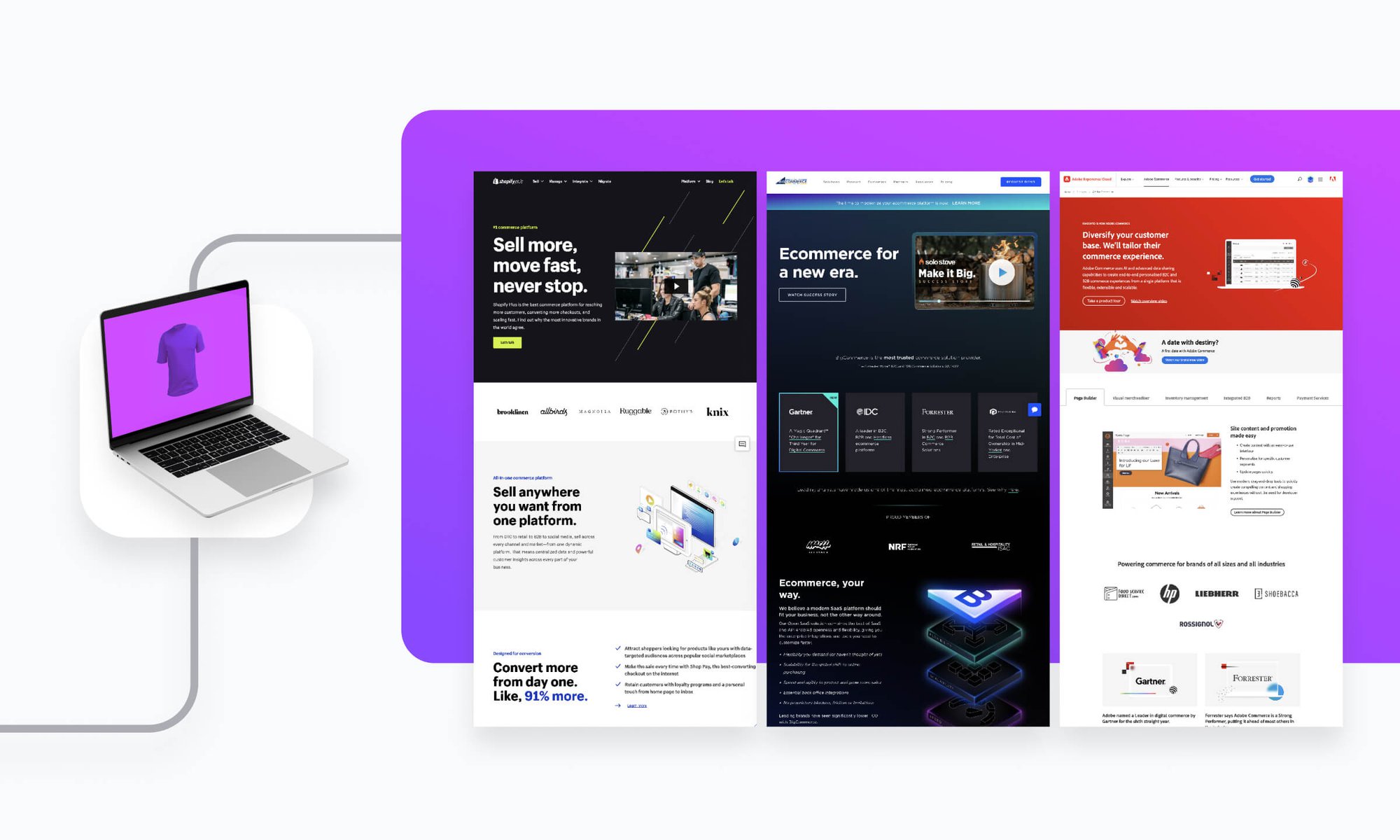
L’eCommerce Headless separa la vetrina del tuo negozio (frontend) dalle operazioni di backend, collegandole tramite API. Questa architettura ti offre la massima libertà di progettazione, pur mantenendo una solida elaborazione degli ordini. Nel 2026, il 73% delle aziende utilizzerà l’architettura headless e le aziende che implementano l’headless commerce registreranno un aumento medio dei tassi di conversione del 42%. Il mercato globale del commercio senza testa crescerà da 1,74 miliardi di dollari nel 2025 a 7,16 miliardi di dollari entro il 2032. Le soluzioni migliori includono Shopify Plus (Hydrogen + Oxygen) per i commercianti Shopify già affermati, BigCommerce per la flessibilità del mercato medio, Adobe Commerce per la personalizzazione delle aziende e Commercetools per il commercio composito API-first. Le aziende con strategie omnichannel mantengono l’89% dei clienti rispetto al 33% degli approcci monocanale.
Abbiamo lavorato con centinaia di aziende di e-commerce alle prese con lo stesso problema: apportare una semplice modifica al design sperando che il sistema di cassa rimanga intatto. Oppure vogliono vendere attraverso gli assistenti vocali, i social media e le app per dispositivi mobili mentre la loro piattaforma attuale tratta ogni canale come un universo separato.
L’eCommerce senza testa risolve questi problemi. Mentre le vendite globali di eCommerce raggiungono 6,88 trilioni di dollari nel 2026Le aziende hanno bisogno di un’architettura che si adatti a qualsiasi luogo in cui i clienti fanno acquisti. Questa guida spiega cos’è l’headless commerce, perché la sua adozione sta accelerando e quali piattaforme offrono i migliori risultati per le diverse esigenze aziendali.
Cosa sono le soluzioni eCommerce senza testa?
A headless eCommerce platform separates the frontend of your online store from the backend. You change your product pages and user interface without touching your order processing, inventory management, or shipping systems.
The frontend presentation (templates, themes, user experience) operates independently from the backend infrastructure that powers the store. This decoupled architecture lets companies use their preferred frontend technology while integrating their chosen backend eCommerce solution for core functionality.
Think of it like a restaurant where the dining room (frontend) and kitchen (backend) operate independently but communicate through servers (APIs). The chef can change the menu without remodeling the dining room. The manager can redesign the space without affecting how food gets prepared.
The headless approach gives businesses the flexibility and agility needed to provide outstanding customer experiences across every touchpoint.

Perché le piattaforme di commercio senza testa domineranno nel 2026
Il passaggio a piattaforme di commercio senza testa riflette cambiamenti fondamentali nel modo in cui i clienti fanno acquisti e in cui le aziende competono.
Current Adoption Rates
I numeri raccontano una storia chiara. Secondo il rapporto State of Headless 2024, Il 73% di tutte le aziende utilizzano ora l’architettura dei siti web headless, con un aumento del 14% rispetto al 2021. Tra coloro che non utilizzano attualmente l’headless, quasi il 98% prevede di valutare soluzioni headless nei prossimi 12 mesi.
Il mercato riflette questa domanda. Il mercato globale del commercio senza testa ha raggiunto 1,74 miliardi di dollari nel 2025 e crescerà fino a 7,16 miliardi di dollari entro il 2032, con un tasso di crescita annuale composto del 22,4%.
Measurable Performance Gains
L’architettura headless offre miglioramenti quantificabili in tutte le metriche chiave:
Aumento del tasso di conversione: Le aziende che implementano il commercio senza testa registrano un aumento medio del 42% dei tassi di conversione. Il marchio di abbigliamento britannico White Stuff ha raggiunto un 37% di aumento dei tassi di conversione dopo il passaggio a un’architettura headless.
Tempi di caricamento più rapidi: Le implementazioni headless riportano una diminuzione del 20% nei tempi di caricamento del sito web in media. Le ricerche confermano che ogni miglioramento di 1 secondo nel tempo di caricamento della pagina produce un aumento di conversione del 2%.
Riduzione della frequenza di rimbalzo: Le aziende che utilizzano architetture headless hanno osservato una 23% di riduzione delle frequenze di rimbalzo, il che indica un migliore coinvolgimento degli utenti.
Omnichannel Excellence
La capacità di offrire esperienze coerenti tra i vari canali ne favorisce l’adozione. La ricerca mostra L’82% degli intervistati concorda sul fatto che l’architettura headless semplifica l’offerta di esperienze di contenuto coerenti tra i vari canali.
Questo è importante perché i clienti interagiscono con i marchi contemporaneamente attraverso il web, il mobile e i touchpoint emergenti. Le aziende con strategie omnichannel conservano in media l’89% dei clienti, rispetto al 33% per le aziende con un impegno omnichannel debole.
Scalability and Speed to Market
L’architettura separa i problemi, rendendo ogni componente più facile da scalare in modo indipendente:
- 79% of headless users rate their scalability as strong versus 62% on traditional platforms
- 80% of survey respondents feel their organization is ahead of competitors when delivering new digital experiences
- Headless commerce reduces time-to-market for new features by up to 50%
Future-Ready Infrastructure
I principi della MACH Alliance (Microservices, API-first, Cloud-native, Headless) sono alla base del commercio moderno. La MACH Alliance riporta che il 92% dei marchi statunitensi ha adottato una qualche forma di commercio composito e un ulteriore 21% sta pianificando l’implementazione entro l’anno.
Le migliori soluzioni di eCommerce senza testa per il 2026
1. Shopify Plus (Idrogeno + Ossigeno)
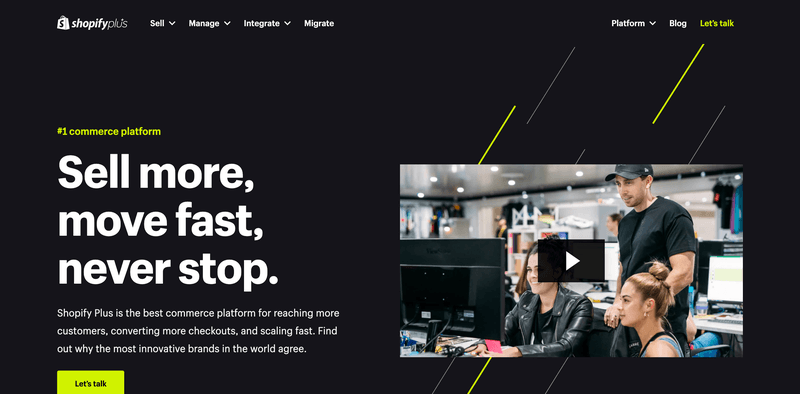
Ideale per: Commercianti Shopify già affermati e pronti per la libertà del frontend
L’offerta headless di Shopify combina Hydrogen (un framework basato su React) con Oxygen (hosting globale) per darti un controllo completo sul design mantenendo il collaudato backend di Shopify. Marchi come Babylist, Ruggable e Figs hanno utilizzato configurazioni headless di Shopify per creare vetrine veloci e ricche di contenuti.
Caratteristiche principali:
- React-based custom storefront development
- Global CDN hosting through Oxygen
- Full access to Shopify’s ecosystem and app store
- Seamless checkout and payment processing
- Native Shopify integrations with support tools
Prezzi: A partire da oltre $2.000 al mese
2. BigCommerce
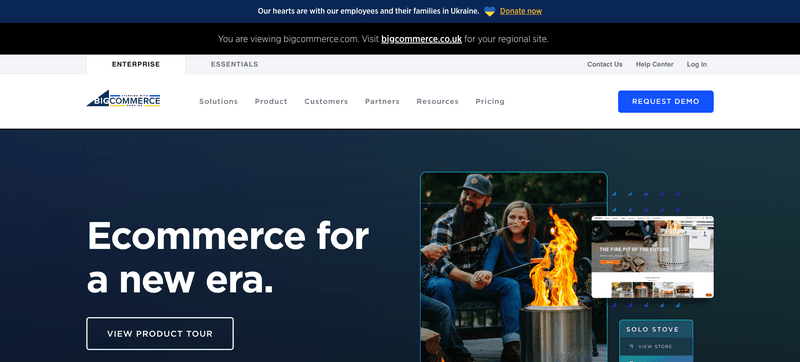
Ideale per: Aziende di fascia media che desiderano una flessibilità headless senza problemi di infrastruttura
BigCommerce offre robuste funzionalità di commercio senza testa attraverso la sua piattaforma SaaS API-first. Marchi come Discount Electronics, Black Diamond e Gorewear hanno adottato BigCommerce per le build headless per migliorare le prestazioni e semplificare l’integrazione tra i sistemi.
Caratteristiche principali:
- REST and GraphQL APIs for frontend flexibility
- Pre-built integrations with popular tools
- 99.99% uptime guarantee
- No transaction fees on any payment gateway
- Native BigCommerce integration with customer service platforms
Prezzi: A partire da 29 dollari al mese, con prezzi aziendali disponibili
3. Adobe Commerce (Magento)
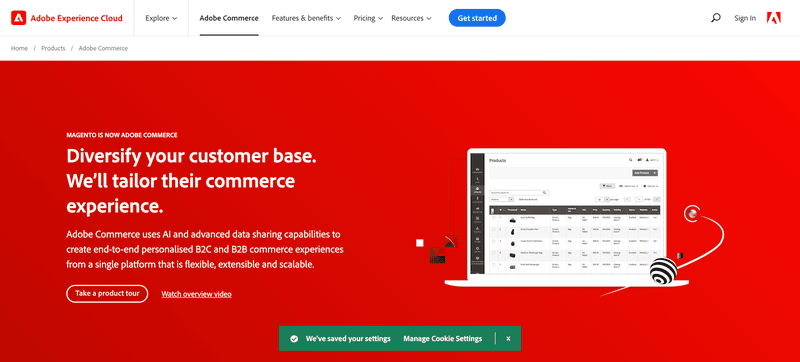
Ideale per: Aziende aziendali che necessitano di una profonda personalizzazione e di contenuti personalizzati
Adobe Commerce adotta un approccio headless con ampie opzioni di personalizzazione e funzionalità omnichannel. La piattaforma funziona bene per le aziende con cataloghi di prodotti complessi e sofisticate esigenze di segmentazione dei clienti.
Caratteristiche principali:
- Advanced inventory management for complex catalogs
- Built-in SEO optimization tools
- Multiple payment gateway support
- Comprehensive analytics and reporting
- Magento integration options for unified support
Prezzi: Prezzi aziendali personalizzati
4. Salesforce Commerce Cloud
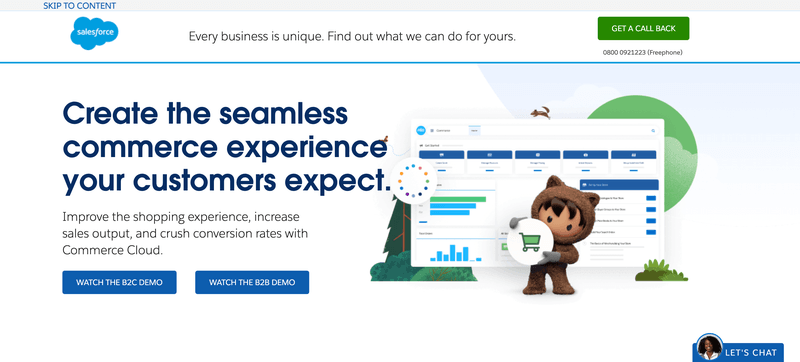
Ideale per: Grandi aziende con ecosistemi Salesforce esistenti
Realizzata dal gigante del CRM, questa piattaforma scalabile offre API configurabili e una perfetta integrazione con il sistema di gestione dei contenuti di Salesforce. La piattaforma è adatta alle aziende che già utilizzano gli strumenti di Salesforce per le vendite e il marketing.
Caratteristiche principali:
- B2B and B2C commerce capabilities in one platform
- Advanced order management workflows
- Native CRM integration with customer data
- AI-powered personalization through Einstein
Prezzi: Prezzi aziendali personalizzati
5. Strumenti commerciali
Ideale per: Le aziende che desiderano un commercio composito e basato sulle API
Questa piattaforma certificata MACH (Microservices, API-first, Cloud-native, Headless) è stata costruita per il commercio composito. L’architettura consente di selezionare gli strumenti migliori per ogni funzione, anziché accettare un compromesso “tutto in uno”.
Caratteristiche principali:
- Pure API-first architecture with no legacy code
- Multi-tenant cloud infrastructure for reliability
- Real-time data synchronization across touchpoints
- Extensive third-party integrations
- GraphQL and REST API support
Prezzi: Prezzi personalizzati in base all’utilizzo
Implementazione dell’eCommerce Headless: Requisiti tecnici
Moving to headless architecture requires planning. Understanding the investment helps you budget appropriately and set realistic timelines.
Risorse per lo sviluppo
Headless commerce requires skilled developers. A Crystallize survey found that 64% of businesses face API complexities during implementation. You need:
Frontend developers: Experience with modern frameworks like React, Vue.js, Next.js, or Angular. These developers build the customer-facing experience.
Backend developers: Understanding of API integration, data architecture, and how to connect commerce systems with frontends.
DevOps support: Cloud deployment, performance monitoring, and continuous integration practices.
Considerazioni sui costi
Organizations typically invest $2.6 million to implement headless architecture at enterprise scale. Mid-market implementations run lower, but costs remain 30-50% higher than traditional platform deployments.
The investment pays back through improved conversion rates, faster feature deployment, and reduced technical debt over time.
Gestione dei contenuti
Consider pairing your headless commerce platform with a headless CMS like Strapi, Contentful, or Sanity. This combination gives your marketing team independence to update content without developer involvement.
The Headless CMS market will reach $3.8 billion by 2032, reflecting demand for content flexibility.
Applicazioni web progressive
PWA implementations provide app-like experiences through web browsers. This approach improves mobile performance and user engagement without requiring customers to download a native app.
Mobile commerce will account for nearly 60% of total online retail sales in 2026. PWAs help capture this traffic with fast, reliable mobile experiences.
Pianificazione delle Integrazioni
Map your integration needs before selecting a platform:
- eCommerce CMS integration for content management
- API performance requirements (REST vs GraphQL)
- Third-party tools including marketing automation, analytics, and customer service software
- Payment processing and checkout customization
- Inventory and fulfillment system connections
Shopify Plus vs BigCommerce: Il confronto senza testa
These two platforms represent the most common choice for mid-market to enterprise businesses considering headless architecture.
Punti di forza di Shopify Plus
Shopify Plus works best for businesses already in the Shopify ecosystem. Hydrogen provides React-based storefront development with familiar patterns for frontend developers. The learning curve stays manageable for existing Shopify users, and the platform maintains access to Shopify’s app ecosystem.
The combination of Hydrogen (frontend framework) and Oxygen (hosting) gives you a complete solution without assembling separate pieces. Checkout remains on Shopify’s infrastructure, which handles PCI compliance and payment processing.
Punti di forza di BigCommerce
BigCommerce provides more built-in features without requiring apps. The platform charges no transaction fees regardless of payment gateway, making it cost-effective for high-volume businesses.
API coverage spans both REST and GraphQL, giving developers flexibility in how they build frontends. Developer documentation runs deep, with extensive resources for custom implementations.
Fattori decisionali
Choose Shopify Plus if:
- You already use Shopify and want to preserve that investment
- Your team has React experience
- You value Shopify’s app ecosystem access
- Checkout customization needs remain moderate
Choose BigCommerce if:
- Transaction fees significantly impact your margins
- You need extensive built-in features without apps
- API flexibility matters more than ecosystem access
- You plan to support B2B and B2C from one platform
Both platforms support decoupled frontend/backend architectures effectively. Your choice often comes down to current tech stack and specific business requirements.
Come misurare il successo del commercio senza testa
Track these metrics after implementing headless architecture to quantify your return on investment.
Metriche di prestazione
Page load speed: Monitor Core Web Vitals (LCP, FID, CLS) and overall page load times. Headless implementations should show improvement within weeks of launch.
Conversion rates: Compare conversion across devices and channels. The 42% average improvement reported across headless implementations provides a benchmark.
Bounce rates: The 23% reduction in bounce rates seen with headless architecture indicates whether your frontend improvements engage visitors.
Metriche aziendali
Revenue per visitor: Track whether faster experiences and better UX translate to higher spending per session.
Development velocity: Measure how quickly your team ships new features compared to your previous platform. The 50% faster time-to-market for new features gives you a target.
Channel performance: Monitor how each touchpoint (web, mobile, social, voice) contributes to revenue. Omnichannel capability should show in diversified channel performance.
Metriche di esperienza del cliente
Customer retention: With omnichannel strategies boosting retention to 89%, track whether your headless implementation improves customer lifetime value.
Customer satisfaction: Survey customers about their experience across touchpoints. Consistency should improve with unified backend data.
Support efficiency: Monitor whether better frontend experiences reduce customer support volume through reduced friction points.
Headless è la scelta giusta per la tua azienda?
Headless architecture works well for specific business profiles. Honest assessment helps you avoid over-engineering a simple problem.
Headless si adatta meglio se hai:
Unique brand requirements: Your brand identity requires custom experiences that templates cannot deliver.
Multiple sales channels: You sell through web, mobile apps, social commerce, marketplaces, and want consistent experiences.
Development resources: You have in-house developers or budget for ongoing agency partnership.
Customer experience focus: You prioritize innovation in how customers interact with your brand.
Growth plans: You anticipate significant scale increases that would strain traditional platforms.
Considera le piattaforme tradizionali quando:
Your needs remain simple: A standard store template meets your requirements without customization.
Technical resources are limited: You lack developers and budget for ongoing frontend development.
Timeline is compressed: You need to launch quickly without extended development cycles.
Budget constraints: The 30-50% higher implementation costs exceed available investment.
L’approccio ibrido
Some businesses adopt partial headless implementations. You might use a headless CMS for content while keeping traditional product and checkout experiences. This approach captures some flexibility benefits while limiting complexity.
Dove sta andando il commercio senza testa
Several trends will shape headless commerce through 2026 and beyond.
Integrazioni AI
AI-driven recommendation engines generate up to 31% of eCommerce revenue through intelligent suggestions. Headless platforms expose the data needed for these systems to function effectively.
Companies implementing AI personalization report a 369% increase in average order value during personalized sessions. Headless architecture makes integrating AI tools straightforward through API connections.
Espansione del commercio composito
The MACH approach becomes the standard architecture. Businesses mix and match best-of-breed solutions for each function rather than accepting compromises from monolithic platforms.
Gartner predicts that composability will be a main objective in over 50% of digital spending decisions. Nine out of 10 organizations report that composable commerce meets or exceeds ROI expectations.
Voce e canali emergenti
Voice commerce, augmented reality shopping, and new interaction models integrate most easily with headless architectures. The API-first approach means new channels connect to existing backend systems without rebuilding infrastructure.
By 2026, almost 70% of eCommerce companies will employ AI solutions to customize experiences, forecast demand, and prevent fraud.
Iniziare con Headless
Ready to explore headless eCommerce solutions? Start with these steps:
1. Limiti attuali dell’audit
Document what holds you back today. Slow page loads? Inability to customize checkout? Disconnected channels? Each pain point helps justify investment and guides platform selection.
2. Valutare le risorse tecniche
Do you have frontend developers on staff? If not, will you hire or partner with an agency? Headless requires ongoing development investment beyond initial implementation.
3. Definisci la tua linea temporale
Headless implementations take longer initially but pay dividends over time. Plan for 3-6 months for mid-market implementations, longer for enterprise deployments.
4. Scegli la tua piattaforma
Based on your business size, technical requirements, and existing systems, select from the platforms outlined above. Request demos from your top choices.
5. Pianifica la strategia di Integrazioni
Map how your headless platform will connect with customer service tools, marketing automation, inventory management, and other systems. Integration planning prevents costly rework.
The eCommerce landscape continues evolving, and headless architecture leads that change. With global eCommerce sales reaching $6.88 trillion in 2026 and expected to grow to $7.89 trillion by 2028, businesses need infrastructure that adapts to new opportunities.
Whether you choose Shopify Plus for its ecosystem, BigCommerce for its value, or Commercetools for enterprise flexibility, the key is starting your headless journey with a clear vision of where you want to go.
Domande frequenti
What is headless eCommerce?
Headless eCommerce separates your store’s frontend (what customers see) from the backend (order processing, inventory, payments). APIs connect them, letting you customize each layer independently without affecting the other.
How much does headless eCommerce cost to implement?
Mid-market implementations typically cost $100,000-$500,000, while enterprise deployments can reach $2.6 million or more. Ongoing costs include frontend development, hosting, and maintenance. These costs run 30-50% higher than traditional platforms but deliver measurable ROI through improved conversion rates.
What is the difference between headless and traditional eCommerce platforms?
Traditional platforms bundle frontend and backend together. Changes to one affect the other, limiting customization. Headless platforms separate these layers, giving you freedom to build unique frontend experiences while maintaining stable backend operations.
Is headless eCommerce worth it for small businesses?
For most small businesses with simple needs, traditional platforms work well. Headless makes sense when you need unique brand experiences, sell across multiple channels, and have development resources to maintain custom frontends. Consider headless when your business reaches mid-market scale.
How long does headless eCommerce implementation take?
Mid-market implementations typically take 3-6 months. Enterprise deployments with complex integrations may take 6-12 months. The timeline depends on customization requirements, integration complexity, and team resources.
What are the main benefits of headless commerce?
Key benefits include 42% higher conversion rates, 20% faster page loads, 23% lower bounce rates, and 50% faster time-to-market for new features. Headless also enables omnichannel experiences that boost customer retention to 89%.
Which headless eCommerce platform is best for Shopify users?
Shopify Plus with Hydrogen and Oxygen provides the smoothest path for existing Shopify merchants. You keep Shopify’s backend, checkout, and app ecosystem while gaining frontend freedom through React-based development.